
Townhouse vs. Condo vs. Apartment: Which Is Right for You?
Real Estate Advice

TL;DR: Townhouse vs. Condo vs. Apartment
|
It’s one of the key questions in real estate: What is the difference between a townhouse vs. condo? What about a condo vs. apartment? There are plenty of lifestyle preferences, plus pros and cons to consider in the townhouse vs. condo vs. apartment analysis, but the detailed differences between the three may not be readily apparent.
Whether you're living on your own and want to rent somewhere close to the action, you’re a young family not quite ready to commit to purchasing a single-family home, or you’re a retiree looking to downsize, read on to compare life in a condo vs. apartment vs. townhouse and see which one is right for you.
| Planning a move? Start by getting a free moving quote from PODS. |
Condo vs. Townhouse vs. Apartment
What are the differences between an apartment vs. condo vs. townhouse? The main factors are structure, renting/owning capabilities, and exterior property. Choosing a certain home style is also dependent on your lifestyle goals today and what you envision for the future. Here’s a closer look at each one.
Apartment
Apartments are typically one-story units within a multi-story building. Some benefits of renting include proximity to the action with a lower cost of living, flexible leasing options, community amenities (like a pool and fitness center), a variety of floor plans, or a way to “test the waters” in a city or neighborhood before purchasing a forever home. Of course, this is a very popular style of homes for big cities like New York. However, with the price of real estate, more and more people are considering the advantages of renting an apartment versus purchasing property.
Townhouse
Townhouses are multi-floor homes that share side walls with neighboring properties. They typically look very similar to one another and include some exterior property, such as a small yard, garden, or patio. While townhomes are more commonly located in urban areas where real estate is a premium, they’re also found in cities and towns of all sizes.
One of the biggest advantages of a townhouse, besides its typically lower cost than that of a single-family home, is less maintenance. Townhouses generally have little or no yard, so you won’t need to hire a landscaping service or buy a lawnmower and all the other tools that come with yard work. That means better affordability and more time on the weekends to relax.
If you do want a taste of the outdoors, you may be able to find a townhome community that shares amenities like a pool, courtyard, and BBQ grills. Keep in mind that these extras may come with a monthly Homeowners Association (HOA) fee, though.
You can rent or buy a townhouse, but most are individually owned. In some cities, however, you may also find apartment townhomes, which basically split the difference between a townhouse and an apartment: Townhouse-style buildings divided into separate rental units. They offer some of the benefits of home ownership with the flexibility of renting.
| Q: What is the main difference between a townhouse and a condo? A: There are two main differences in the townhouse vs. condo comparison. First, the layout. Condos are individual units inside a larger building, and townhomes are connected multi-floor homes. And second, ownership type. Condos are typically owned by the resident, while townhomes are either owned by the resident or rented to a tenant. |
Condo
Condos (or condominiums, if you’re fancy) can resemble either apartments or townhouses. Like apartments, they can be part of a larger community where residents share amenities and common areas. While one isn’t necessarily better than the other, the difference between a condo vs. apartment has to do with property ownership.
Unlike an apartment, which is leased from a landlord or property management company, a condo is individually owned. Condo owners are responsible for the maintenance and upkeep of the inside of their unit, including plumbing and electricity, but the condo association will generally maintain the exterior. Rules and regulations are enforced by the HOA, which is made up of member residents who manage maintenance of the building and community. If determining who is responsible for what gets a little confusing, your best bet is to consult with an experienced real estate attorney, if you can.
| Q: Is a condo nicer than an apartment? A: The condo vs. apartment debate is nuanced because condos are often regarded as nicer than apartments, but that’s not always the case. The benefit of a condo, however, is the equity one receives through property ownership. Other than that, there’s not much difference, typically, between an apartment and a condo with similar styles, square footage, and amenities. |

When it comes to choosing a condo vs. apartment, it helps to know what you get — and what you don’t — with each property type.
What Are the Pros and Cons of an Apartment?
Pros of Living in an Apartment
Debating between a condo or apartment? Here’s some information to help you decide which type is right for you and your situation.
Apartments are great for people who are:
- Single or couples who don’t need a lot of space.
- Working outside of the home and don’t want a lot of frills (this can help you save up for buying a home of your own or another investment).
- Looking for flexibility and no long-term commitments.
- Only interested in minimal home maintenance.
Cons of Living in an Apartment
Apartments have plenty of perks, but in some situations renting an apartment might not be as advantageous as renting or buying a house or townhome.
Reasons why apartment living might not be the best bet for you:
- You have a large family with young children and need more square footage than an apartment can offer.
- You want your home to be an investment and build equity over time.
- You’re an HGTV fanatic and dream of creating a space that’s truly your own.
- You’ve just adopted a new four-legged family member, but your lease doesn’t allow pets.
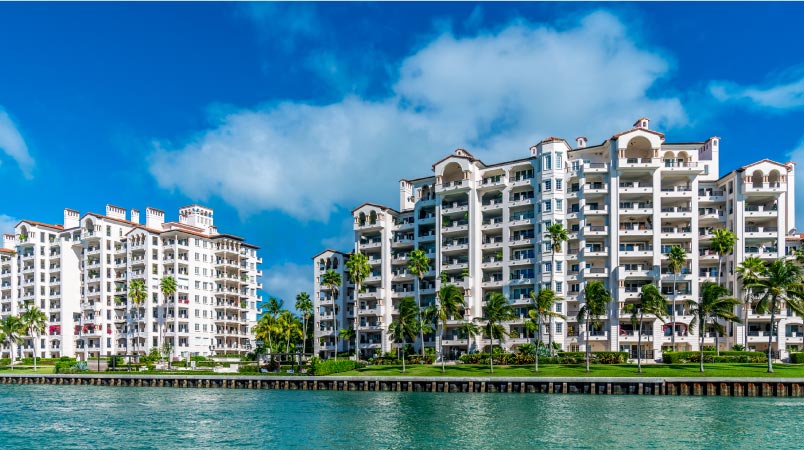
Want to own property but don’t have time for land upkeep? Consider a condo!
What Are the Pros and Cons of a Condo?
Pros of Living in a Condo
If you’re a fan of the apartment lifestyle but you want to invest in property, a condo may be right up your alley. Here are some points to ponder as you’re considering condo vs. apartment living.
Living in a condo means:
- Maintenance will be manageable, and you won’t have to mow a lawn or clean the shared pool and tennis court.
- You’re probably paying less for the condo than a townhouse because condos don’t come with land. Insurance rates are lower, too.
- You have flexibility to live in your condo year-round or use it as a vacation home.
- You don’t need to worry about upkeep as much as you would with a single-family house.
Cons of Living in a Condo
Is there a difference between owning a townhouse vs. condo? They may seem similar on the surface, but there are some financial and lifestyle considerations.
A townhome is sometimes a better fit than a condo because:
- There are more HOA rules and regulations to manage communal amenities, like a pool or rec room.
- You have to pay HOA fees for the home maintenance and amenities (although this is likely with many townhomes, too).
- Condos are typically smaller than townhouses and may not be suitable for large families.
- The condo community can be a con if you’re not comfortable living close to your neighbors and sharing amenities and communal spaces.
- Noise may be a factor, but that’s often outweighed — like many condo cons — by the strong friendships that can come with condo living. (You’re all close to each other. Might as well be friends with your neighbors!)
Wondering if it’s the right time to invest in residential real estate? Consider these points in the condo vs. apartment dilemma: As of August 2026, much of the U.S. is a buyer’s market. But even in a seller’s market, purchasing a condo isn’t a bad idea, especially for first-time buyers. Condos can appreciate in value over time, and if you decide to move on to a larger home, you can still keep the condo and rent it for passive income.
| Pro tip for snowbirds: If your condo is a second home in a sunnier spot than you’re used to, here are some tips for moving to a different climate. |
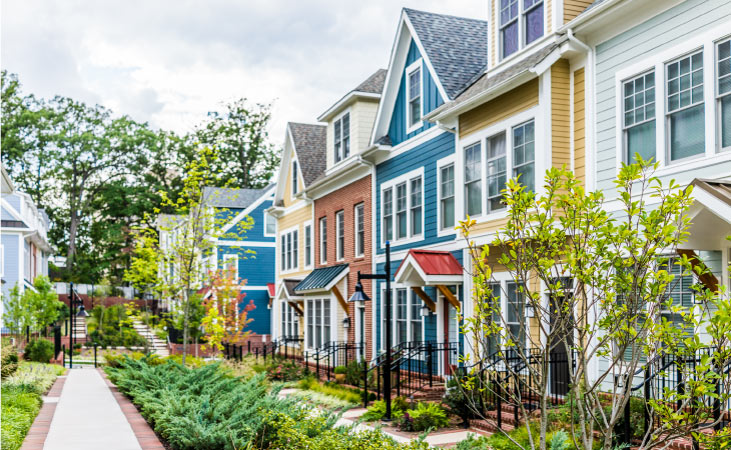
Townhomes are great for renters or buyers who want more space but not more land.
What Are the Pros and Cons of a Townhouse?
Pros of Living in a Townhouse
Not ready to make the leap to single-home ownership but want some of the benefits? Townhomes offer the feel of a house without the yard work and exterior maintenance, among other pluses.
Perks of townhome living include:
- Having more space than an apartment or condo.
- Being able to use the townhome as an investment.
- Taking a first foray into real estate with a plan to upgrade to a bigger home in the future.
Cons of Living in a Townhouse
Basically, you get the benefits of living in a home without the obligations. But other than that, what’s the difference between a townhouse and apartment? And why wouldn’t you choose a townhome? They are pretty great, but no living situation is perfect for everyone.
Here’s why a townhouse might not be right for you:
- It may be governed by an HOA, which generally comes with extra rules and fees.
- If you’re sharing a wall with a neighbor, it may be noisy and afford you less privacy.
- Living on multiple levels means climbing stairs — good for extra exercise, but inconvenient on grocery day.
| Q: What are the three types of homes? A: Trick question! There are way more than three types of homes. This guide covers apartments, condos, and townhouses. But single-family homes, RVs, and studios are options, too. |
Townhouse vs. Condo: Is Renters’ Insurance Needed?
Nobody wants to think that something bad could happen to them or their stuff, but that’s a reality of modern life — and it’s why insurance exists. Before making the purchase, get familiar with the types of policies:
Condo insurance (AKA HO-6 insurance) protects against liability claims or property loss inside your unit. A master insurance policy (which your HOA is responsible for carrying) protects common areas outside your unit, like the walkways, swimming pools, and lobbies. Your share of the cost for the master policy is typically included in your HOA fee. This reflects the general agreement that a condo owner is responsible for everything within their walls, and the complex is responsible for what’s outside — a key consideration in the townhouse vs. apartment debate.
There isn’t really an insurance policy specifically for townhouses. A typical homeowners insurance plan is sufficient. And if you’re renting your townhouse, it’s a good idea to get renters insurance — not required by law, but often included in the terms of a rental lease. Depending on the policy, you may be protected against damages caused by flooding, wind, fire, etc., along with theft. If your townhouse is part of a larger community with an HOA and shared amenities, you may be expected to contribute to a master policy, as well, just like condo owners.

While traditional wisdom says that buying is better than renting in every scenario, there are some situations where you’re better off going the rental route.
Condo vs. Apartment vs. Townhouse: Rent or Buy?
While conventional wisdom says that buying is better than renting in every scenario, there are some situations where you’re better off going the rental route. Here’s a handful of those.
When You Should Rent
- You don’t have enough cash on hand for a 10 to 20 percent down payment, plus 2 to 5 percent closing costs.
- You’re in the process of improving your credit score.
- You plan to move again in the next five years.
- You live in a major metropolitan area (studies show that renting is now cheaper than buying in larger U.S. cities).
- You want the freedoms that come with renting — such as the independence to travel or relocate and a maintenance-free lifestyle.
When You Should Buy
- You want to build equity and possibly make a profit someday.
- You plan to stay in the same city for five or more years.
- You’re a first-time homebuyer and don’t want to keep up with maintenance. (No mowing lawns and cleaning gutters for you!)
- You want more control over features like paint color, appliances, countertops, etc.
- You may want to rent out the condo in the future for passive income.
| Q: What’s the difference between an apartment, condo, and townhouse? A: The biggest differences between an apartment, townhouse, and condo are ownership, layout, and maintenance. Apartments are rented, townhouses are multilevel homes that typically include more space and some ownership of the exterior, and condos are individually owned units. |
Townhouse vs. Condo: What Are the Mortgage Options?
Just like detached homes, townhouses and condos can be financed with a mortgage. The main difference is that buying a townhouse generally follows the same financing process as purchasing a single-family home, because you’re buying both the home and the land it’s on.
Condo financing can be more involved. In addition to qualifying you for a mortgage, lenders may require information about the condo association’s finances, insurance, and management. Some condo or co-op boards also require buyers to complete an approval process before closing.
| Q: Is a townhouse a better investment than a condo? A: Townhouses are often considered better investments than condos because you own the structure and the land. There are also usually lower association fees, more privacy, and extra space. This is especially great for growing families. Plus, they typically cost less than a single-family home. |

PODS can help you handle your move, no matter which property type you choose.
How To Choose What’s Right for You
A few things to consider while evaluating your options include the size of your family, your budget, whether or not you have pets, your lifestyle, how much home maintenance you want to take on, and (last, but certainly not least) the city where you want to live.
And while all three styles of home can be found in nearly every corner of the country, the price point and square footage of each will obviously vary depending on location. For example, if you’re looking for a townhouse in New York City versus one in Dallas, your Zillow searches will look drastically different. While the Big Apple definitely has its share of massive dwellings, generally speaking, townhouses in NYC are smaller and (you guessed it) more expensive than those in Dallas.
Moving Into Your New Home (Whatever It May Be)
Once you’ve made your decision, you can make the move to your new home flexible with PODS portable moving containers. The container is delivered right to your driveway for convenient loading on your own schedule, and PODS can connect you with local packing and loading services if you need a hand with heavy lifting. When you’re packed and ready to roll, your container will be picked up and delivered to your new home or to a secure PODS Storage Center. If you take the Storage Center route, no sweat: One month’s storage is included in the cost of every move.
Visit PODS online for a free local moving quote or call 877-350-7637 for long-distance moving.
Bonnie Azoulay Elmann is an NYC-based freelance writer. Her work has appeared in Glamour, Health, and Parents, among others. She is an extremely driven digital storyteller who may or may not have a slight obsession with fanny packs.
*This article was written on behalf of PODS Enterprises, LLC (“PODS”). PODS does not warrant the completeness or accuracy of any information contained in this article and disclaims any liability for reliance upon the content herein.

Your quote in 60 seconds
Get pricing tailored to your needs!
Related Articles



Write an Offer Letter for a House in 6 Simple Steps and Say Hello Your Dream Home
Real Estate Advice
Read more