How to Pack a PODS Container: 18 Storage Mistakes to Avoid
Storage Tips and HacksMoving and Storage Container Guides
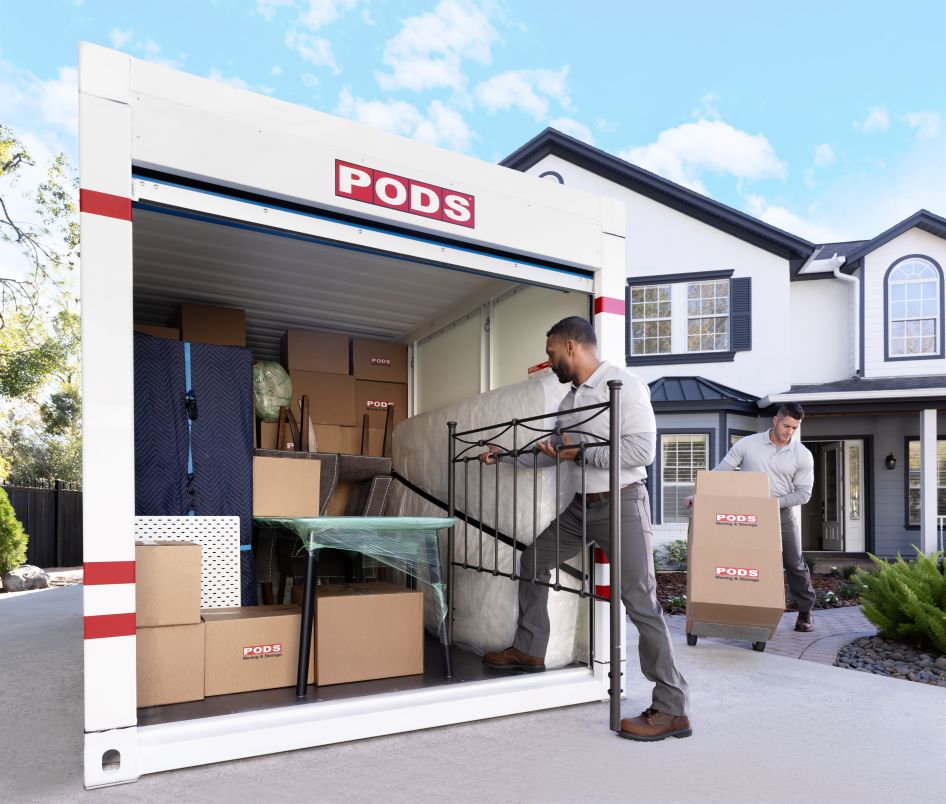
TL;DR: How to Pack a PODS Container The biggest mistakes people make with portable storage containers include loading in the rain, stacking heavy items unevenly, storing perishables or other prohibited items, and forgetting to lock the container. Plan ahead and keep an inventory as you go, choose the right container size, talk to building management and your driver about delivery placement, and distribute weight evenly as you secure each layer. Keep irreplaceable documents and heirlooms with you, check what your insurance already covers, and remember that PODS containers are weather-resistant, not climate-controlled, so items sensitive to temperature or humidity may need climate-controlled storage instead. |
Whether you’re spring cleaning, moving apartments, or finally dealing with that spare room that’s become the unofficial home of everything you don’t know what to do with, portable storage can make life a whole lot easier. But knowing how to pack a PODS container isn’t only about fitting everything inside. A few avoidable storage mistakes can mean damaged belongings, a container that’s difficult to move, or the unpleasant discovery that something you packed never should have gone in there in the first place.
How to Pack a PODS Container: 18 Dos and Don’ts
PODS offers a variety of storage options depending on what you need. You can keep a portable storage container on your property for convenient access or have it picked up and stored at a PODS Storage Center. And if a move is part of the plan, brushing up on a few packing hacks beforehand can save you some moving-day aggravation. The trick is knowing what to do — and, just as importantly, what not to do.
1. Do Plan Ahead
Whether it’s making use of clever packing hacks for moving containers or reserving your portable storage containers far enough in advance, it’s important to have a plan in place from the get-go. When you take the time to consider potential issues that might arise, it allows you to handle problems more easily (or avoid them altogether).
2. Don’t Go In Blind
Once you have a plan, actually use it. (Revolutionary, we know.) Measure bulky furniture, label your boxes, keep an inventory, and know roughly where different categories of belongings will go. That’s especially helpful if your container will be in storage for a while and you eventually need to retrieve one specific item.
If questions come up about your rental, delivery, storage, or container, the PODS FAQs are a good place to check before improvising.
3. Do Get an Appropriately Sized Container
Choosing a portable storage container is a Goldilocks situation: You want enough room without paying for space you don’t need. Going too small can leave you trying to squeeze belongings into every last inch — or discovering halfway through loading that another container is necessary. Going unnecessarily large isn’t ideal either, because excess open space can give belongings more room to shift.
Use your home size, amount of furniture, and particularly bulky belongings to help determine the right moving container size.
| Don’t Forget About Weight: Space isn’t the only limit to keep in mind. Current PODS maximum container weight limits are 5,200 pounds for an 8-ft container, 4,700 pounds for a 12-ft container, and 4,200 pounds for a 16-ft container. If you’re loading especially heavy belongings — think appliances, safes, exercise equipment, book collections, or tool chests — keep weight in mind along with available space. |
4. Don’t Have Your Container Delivered Just Anywhere
When having a PODS container delivered to you, be sure to speak with the driver before or upon arrival, so you know where they can place it (newly paved driveways or uneven surfaces are a no-go) and can decide which direction you’d like the door facing. Communicating with the driver ensures the container isn’t left blocking your car from the garage or inconveniently stationed too far from the door you’ll be bringing items out of — or any other unfortunate scenario.
And how long can you keep a PODS container in your driveway? A PODS container rental has one month of storage built into the final cost, but you’re welcome to extend that rental period, if necessary. That’s one of the benefits of working with PODS — flexibility.

Talk to your landlord, property manager, or building management before scheduling delivery of your portable storage container.
(Source: Kampus Production via Pexels)
5. Do Communicate With Your Building Management
Apartment dwellers, this one’s for you. Talk to your landlord, property manager, or building management before scheduling delivery. Your property may have rules about portable storage containers, designated placement areas, access requirements, or limits on how long a container can remain on-site.
Whether someone has to let the driver onto the premises or you need permission to leave your portable storage container in a particular place, you’ll want to make sure both you and your building management have the discussion before the container arrives.
6. Don’t Load Items While It’s Raining
Even with a weather-resistant container, loading wet belongings is asking for trouble. Cardboard boxes can absorb moisture while they’re being carried outside. Trap that moisture inside a packed container for weeks or months, and you may eventually be greeted by mildew, warped cardboard, or other moisture-related damage.
If the forecast looks questionable, waiting for a dry loading window is worth it.
7. Do Put the Heaviest Boxes on the Bottom
This is packing 101, but it earns a spot on the list because gravity remains undefeated. Build a sturdy base using heavy boxes and furniture, then work upward with progressively lighter items. Fragile dishes, lamps, and other breakables have no business supporting your home library.
As you load, also think about accessibility. Seasonal clothes you won’t need for six months can head toward the back. The box containing something you’ll need next Tuesday? Keep that closer to the door.
8. Don’t Put All the Heavy Things on One Side
Heavy items belong on the bottom, but they also need to be distributed throughout the container. Loading all your book boxes, appliances, weights, and other dense belongings on one side creates an uneven load. Instead, work in sections from the back toward the front, balancing heavier items across the floor and stacking lighter items above them. That helps create a more stable load and reduces shifting when the container is transported.
9. Do Secure Your Belongings
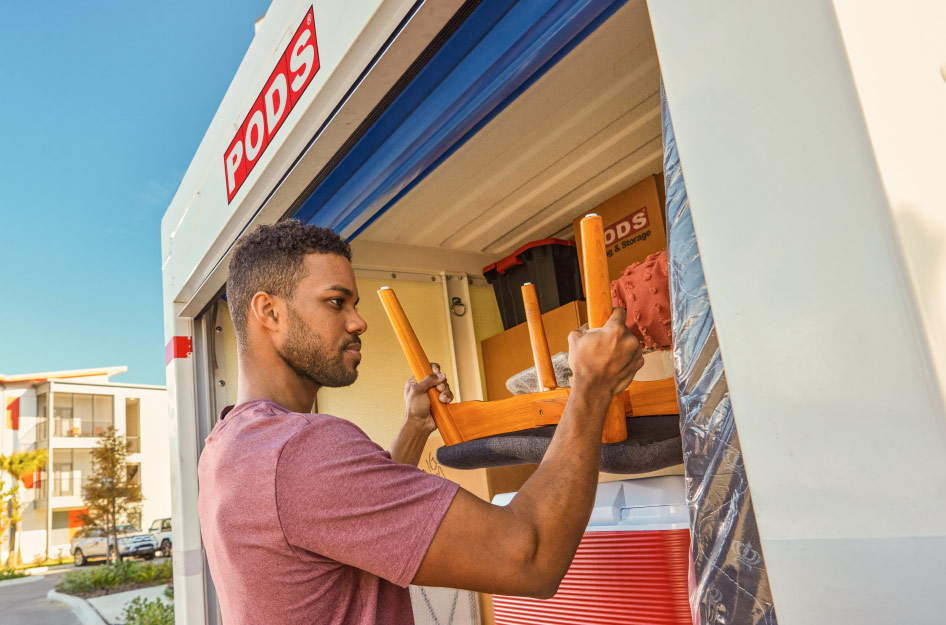
Another well-known but important tip when it comes to how to pack a PODS container: Secure your belongings! Wrap your breakables in bubble cushioning roll before loading them into boxes and use furniture pads to protect larger pieces. After you’ve loaded the first “wall” of items, secure it to the container with loading straps, bungee cords, or rope before continuing to load. This will help keep everything in place during transit.
| Did you know? All PODS moving and storage containers are equipped with hooks to help you secure your belongings. The best part? They’re located throughout the container, so you can decide the best way to strap everything down. |
10. Don’t Store Perishables
Nobody wants to open a storage container and discover that forgotten groceries have spent the last month developing their own ecosystem.
Food and other perishables should stay out. And don’t leave any plants or other living things in the container, either. Besides being a bad environment for living things, food and plants can introduce unwanted moisture, odors, and pests. Before shutting the door, check your boxes twice. That forgotten bag of pantry supplies isn’t going to improve with age.
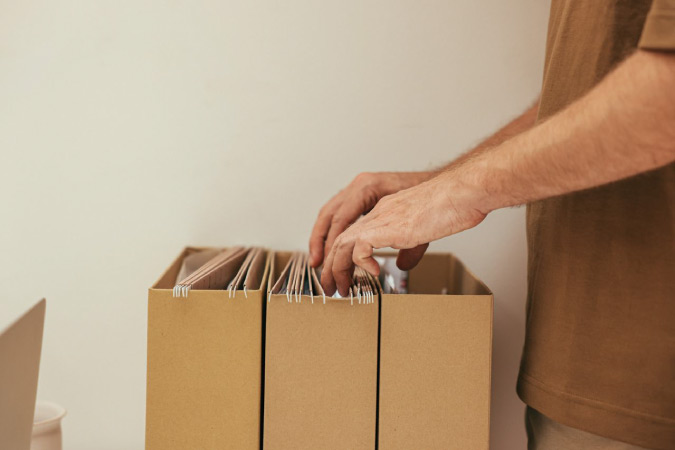
Keep personal records and financial documents at home with you.
(Source: Cup of Couple via Pexels)
11. Do Keep Important Papers and Irreplaceable Heirlooms With You at Home
A portable storage container is useful for a lot of things. Your passport, birth certificate, priceless family photos, and one-of-a-kind heirlooms aren’t among them. Keep personal records, financial documents, irreplaceable artifacts, artwork, jewelry, currency, and other especially valuable belongings somewhere secure and accessible.
A good rule of thumb: If losing it would be devastating — rather than merely annoying — don’t put it in the container.
12. Don’t Use Storage as Your Trash Bin
You know the stage of decluttering when decision fatigue kicks in and suddenly “put it in storage” sounds like a perfectly reasonable category? Resist.
Portable storage can be useful for both short- and long-term needs, but filling valuable space with belongings you already know you don’t want just delays the inevitable. Donate, sell, recycle, or toss what you can before loading. Your future self — who otherwise has to unpack the box labeled “misc.???” — will appreciate it.
13. Do Use Climate-Controlled Storage for Certain Items
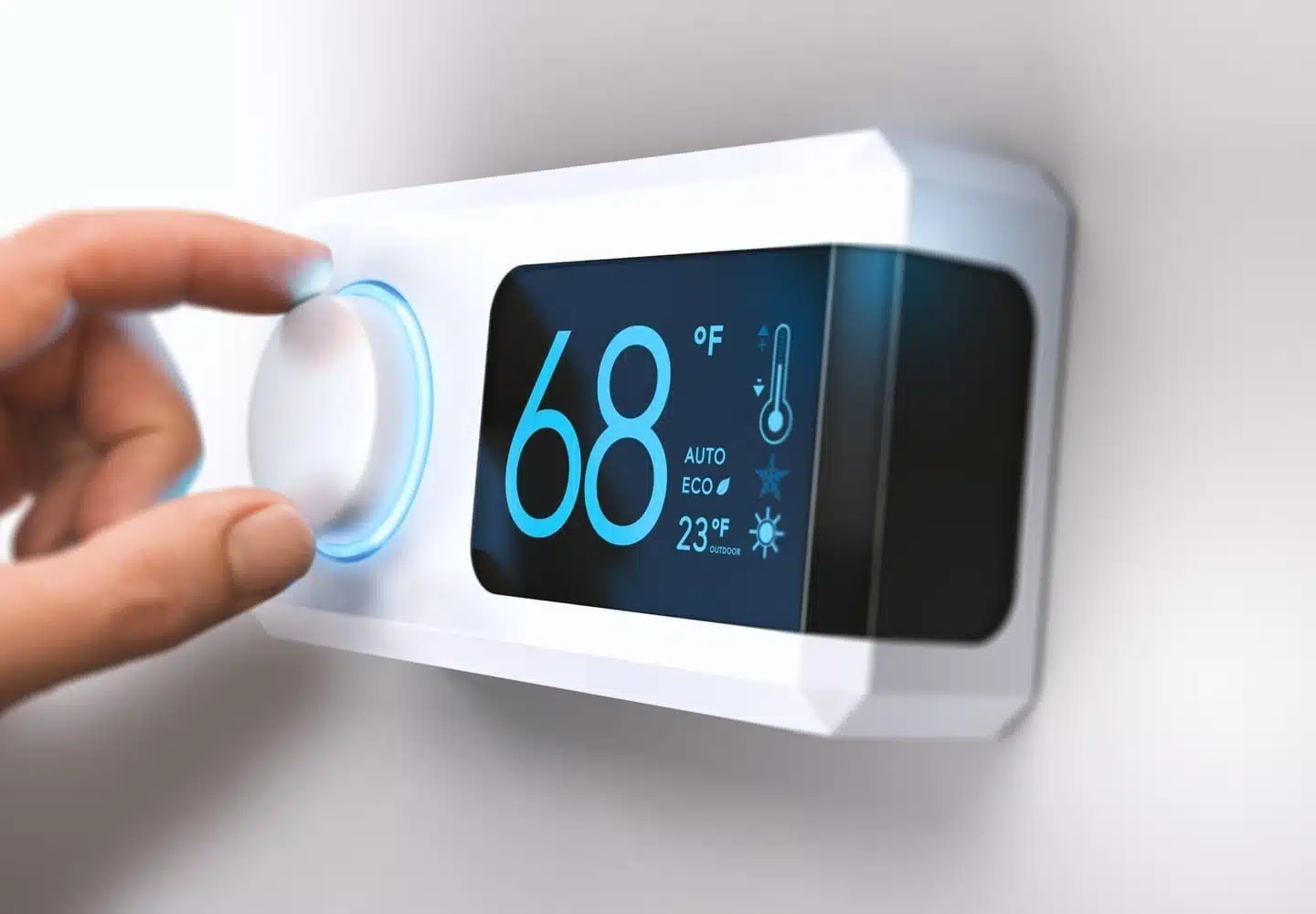
Most ordinary household belongings don’t need climate control. Some items, however, can be sensitive to prolonged heat, cold, or humidity. Rare books, vinyl records, musical instruments, artwork, and other delicate belongings may be better suited to climate-controlled storage, depending on their materials and storage requirements.
| Q: Are PODS portable storage containers climate-controlled? A: No, PODS portable storage containers and secure storage centers are not climate-controlled. However, PODS storage centers in Canada are heated when necessary to maintain temperatures around 59–68ºF (15–20ºC). |
14. Don’t Pay for Climate-Controlled Storage if You Don’t Need It
The flip side: Don’t pay extra for a feature your belongings don’t require.
If you’re storing standard household goods that aren’t particularly sensitive to temperature or humidity, climate-controlled storage may be unnecessary. And remember the terminology here: Are storage containers waterproof? Not completely. PODS containers are weather-resistant, and they aren’t climate-controlled.
15. Do Get Contents Protection for Your Stored Items
Before storing belongings away from home, find out what protection you already have and whether you need additional coverage. Your homeowners or renters insurance policy may provide some off-premises coverage, but limits and exclusions vary. Review your policy with your insurance provider rather than assuming everything in storage is automatically covered.
PODS also offers content protection options, so compare what’s available and decide what makes sense for your belongings.
16. Don’t Store Hazardous or Dangerous Items
As mentioned earlier, perishables, important documents, and heirlooms are some examples of what not to put in a storage container. But it’s also important to avoid anything that may cause harm to your other belongings, people handling the storage container, or the container itself. PODS prohibited items include toxic chemicals, large batteries (think: Electric bikes, power tools), equipment that may have gasoline, or illicit goods. If you’re not sure if something belongs in storage, consult the PODS FAQs page or your storage rental agreement. You can also reach out to PODS directly by calling (855) 706-4758.
PODS Prohibited Items: What You Can’t Store in a PODS Container
| Item/Category | Examples | Why It’s a Problem |
|---|---|---|
| Perishable items | Perishable food | Can spoil and attract pests |
| Hazardous chemicals | Bleach, ammonia, corrosives, pesticides | May be toxic, corrosive, flammable, or otherwise hazardous |
| Fuel-containing equipment | Generators, grills, smokers, fire pits with fuel or oils | Fuel, gases, or liquids can create fire and safety hazards |
| Certain lithium-battery items | E-bikes, power tools, toys, or electronics with non-removable lithium batteries | Lithium batteries can pose a fire risk |
| Motorized vehicles | Cars, motorcycles, dirt bikes, motorized scooters, golf carts | Motorized vehicles cannot be placed in PODS containers |
| Compressed gases/explosives | Propane tanks, oxygen tanks, aerosols, fireworks, flares | Fire, explosion, and pressure hazards |
| Illegal items | Illegal goods or substances | Prohibited by law and PODS policy |
| Important documents/heirlooms* | Passports, birth certificates, financial records, artwork, heirlooms | Not necessarily prohibited, but strongly discouraged because these items may be valuable or irreplaceable |
*If you’re unsure whether a particular item can go inside, check the PODS containers and storage FAQs before loading it. The current policy is the final word, especially for batteries, chemicals, fuel-containing equipment, and other items that aren’t always obvious.
17. Do Make a Record of What You’re Storing
Label every box clearly and keep an inventory as you load.
It doesn’t need to be a museum-grade catalog. A simple list noting which boxes contain kitchen supplies, winter clothing, books, or holiday decorations can save you from tearing through half the container later.
This becomes even more useful if you’re using multiple portable storage containers. Number the containers and note which belongings went into each one.
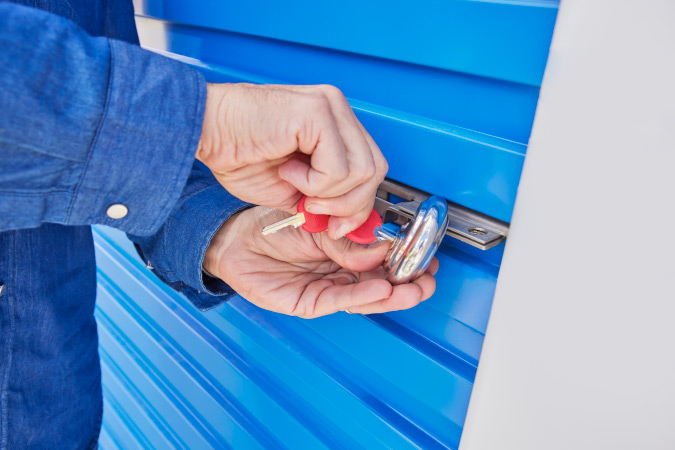
Keep the container locked whenever you aren’t actively loading or unloading, whether it’s sitting on your property or at a PODS Storage Center.
18. Don’t Forget to Lock Your Storage Container
You’ve planned, packed, balanced, labeled, and strapped everything down. Don’t stumble at the finish line by forgetting the lock.
PODS recommends using a disc lock or appropriately sized padlock. Keep the container locked whenever you aren’t actively loading or unloading, whether it’s sitting on your property or at a PODS Storage Center.
And put the key somewhere memorable. “Somewhere safe” has an uncanny ability to become “somewhere nobody remembers” three months later.
Storage Mistakes and PODS Containers — FAQs
Q: What should you not put in a PODS container?
A: PODS prohibited items include hazardous materials, flammable and combustible substances, compressed gases, explosives, radioactive materials, motorized vehicles, and illegal items, among other categories. Items with non-removable lithium batteries are also prohibited. PODS additionally recommends against storing certain valuable or irreplaceable belongings, such as important documents and heirlooms. Check out this ultimate guide on what not to put in a storage unit or PODS container.
Q: Are PODS containers waterproof?
A: PODS containers are weather-resistant, not completely waterproof. They’re designed to protect belongings from typical outdoor weather, but you should still avoid loading wet boxes or belongings. Items particularly sensitive to temperature or humidity may be better suited to climate-controlled storage.
Q: What is the weight limit for a PODS container?
A: Current maximum weight limits are 5,200 pounds for an 8-ft container, 4,700 pounds for a 12-ft container, and 4,200 pounds for a 16-ft container. You generally don’t need to calculate the exact weight of every box, but pay particular attention if you’re loading appliances, exercise equipment, safes, large book collections, or other unusually heavy belongings.
Q: Will my stuff get ruined in storage?
A: If packed and loaded correctly, your belongings will not get ruined in storage. Be sure not to load your storage unit in the rain or otherwise let moisture accumulate on your items when loading them; otherwise, they may mildew, rot, or warp.
Q: Can you put electronics in a PODS container?
A: Yes, you can put your electronics in a PODS portable storage container. If you’re using it for long-term storage or during extreme weather, though, you may want to opt for climate-controlled storage instead, as some electronics are affected by extreme heat or cold. Snap a photo of the connections and pack it with your electronics to save yourself a headache down the line. Remove any batteries and unplug any cords before storing. Whether you’re using the container for short- or long-term storage, the best way to pack up your electronics is by placing them back in their original boxes.
Q: Can you pack cleaning products in a PODS container?
A: While you can pack most household goods in your PODS storage container, stashing cleaning products may not be the best idea. PODS prohibited items include hazardous or toxic chemicals, so you should not pack bleach or ammonia in your storage container. You can absolutely stash your brooms or mops in there, though!
Q: How do you wrap furniture for a PODS container?
A: When prepping your furniture for a move, cover items in moving blankets and use stretch wrap to secure them in place. You can also use stretch wrap to protect soft furniture (like fabric couches) without using moving blankets. Place each mattress in a mattress protector, and pack appliances in cardboard boxes (if you have the original boxes, even better).
Q: Is PODS more expensive than storage?
A: Storage costs vary from one storage facility to the next, but you can get a personalized quote online or call (855) 706-4758. One of the main perks of renting a PODS container is that you don’t have to also rent a truck to cart all of your things to a storage facility (an additional expense). Your PODS container is delivered to your driveway for convenient packing and loading, then picked up and taken to a storage center or your new home (if you’re using it to move).
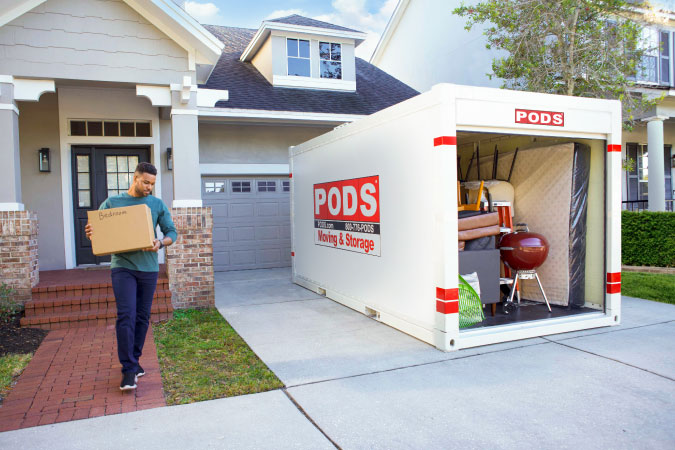
Avoiding storage mistakes gets considerably easier when the container itself works with your loading plan.
Is PODS the Best Option for You?
Avoiding storage mistakes gets considerably easier when the container itself works with your loading plan. If you like the idea of a storage container delivered right to your driveway, convenient loading with a month of built-in storage, the option to have your container picked up and stored in a secure PODS Storage Center, or even transported to another part of the country — then PODS is the best storage option for you.
Ready to get started? Visit PODS online for a free local moving quote or call 877-350-7637 for long-distance moving.
*This content was refreshed with the assistance of artificial intelligence. It was then fact-checked, proofread, and edited by the real-life intelligence of the PODS Blog team. PODS however does not warrant the completeness or accuracy of any information contained in this publication and disclaims any liability for reliance upon the content herein.

Your quote in 60 seconds
Get pricing tailored to your needs!
Related Articles

What Can I Store in a Non-Climate-Controlled Storage Container? Here’s What You Need to Consider
Storage Tips and Hacks
Read more