
The 2026 Real Estate Reset: Is Now a Good Time To Buy a House?
Real Estate

Is now a good time to buy a house? While there’s no such thing as a perfect time to buy, 2026 is shaping up to be a pretty smart period to make a move. The housing market is finally starting to cool off from the post-pandemic rollercoaster, settling into what many are calling the “Great Housing Reset.” So, things are looking a little more predictable and a lot less chaotic. Keep reading to see whether 2026 could be the right time for you to buy a home in the U.S.
The 2026 Buying Verdict
The housing market is starting to shift gears, moving away from the ultra-competitive seller’s market we’ve seen in recent years toward a more balanced playing field. Here’s a breakdown of the current landscape:
Reasons To Buy in 2026
- Mortgage rate relief: There’s been a notable mortgage rate shift in 2026, with the average 30-year fixed-rate mortgage dropping to 5.98 percent — its lowest level since September 2022.
- Inventory growth: While the pace of housing inventory growth doesn’t quite match the rapid increases of 2025, active listings have still gone up 10 percent year-over-year.
- Long-term equity: Homeownership remains a hedge against inflation, and home equity has reached a record $21.4 trillion.
Reasons Not To Buy in 2026
- High home prices remain: While home prices in 2026 remain high, significant spikes aren’t expected.
- Opportunity cost: If you’re not sure about settling down long-term, the money spent on closing costs might not be worth it.
- Economic uncertainty: The housing market is only beginning to cool down, which means conditions could become even more buyer-friendly over the next year or two.
| Q: Should I buy a house now or wait in 2026? A: 2026 is a strategic time to purchase a home, primarily because of interest rate relief and buyers’ leverage. Whether you should buy now or wait will depend on your financial readiness and local market conditions. |
The Post-Volatility Era
To understand the state of the housing market today, it’s important to look back at the early 2020s — a time that altered the “American dream” of homeownership. The hectic pandemic boom drove home prices and interest rates to record heights. Now that the emergency measures and market frenzy have faded, the economy is finding its footing again. Now, the question of “Is now a good time to buy a house?” comes down to whether the new landscape aligns with your financial health and long-term goals.
Know Your Readiness
Buying a house in 2026 is about evaluating your own financial readiness and plans for the long-run. You should ask yourself questions like:
- Can I afford the monthly payments without stretching my budget too tightly?
- Is my career stable enough to commit to a specific location for at least five years?
- Is now a good time to buy a house given my long-term goals, or would I be better served waiting?
For the first time in many years, the answer to the question, “Is it a good time to buy a house?” is being shaped by your needs as a buyer — not the demands of the seller. And that shift comes from two large forces: Borrowing costs and inflation, both of which are finally moving in a more favorable direction.
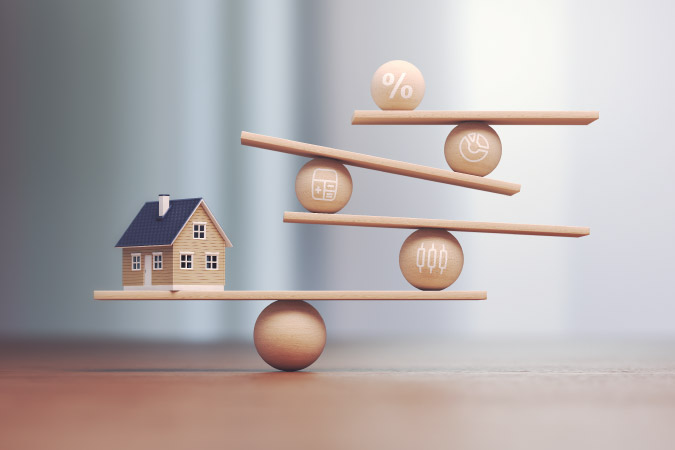
Right now, the average 30-year fixed mortgage rate is 6.37 percent. In February, it dipped to 5.98 percent — the lowest it’s been since late 2022.
Interest Rates & Inflation: The Macro View
The 2026 normalization phase is anchored by a shift in the two most powerful components of the housing market — borrowing costs and the Consumer Price Index (CPI). Rather than sudden shocks, the economy’s climate is defined by gradual movements.
The New Normal of Interest Rates
One of the most critical factors in what to look for when buying a house is the state of the mortgage and interest rates. In the world of real estate, certain numbers can completely change buyer behavior, and six percent is one of those “magic numbers.” Once mortgage rates fall below that line, many buyers who’ve been waiting on the sidelines may feel more confident jumping back into the market.
According to Fannie Mae, interest rates are expected to hover between 5.9 percent and 6.3 percent throughout 2026. Right now, the average 30-year fixed mortgage rate is 6.37 percent. In February, it dipped to 5.98 percent — the lowest it’s been since late 2022.
The Impact of Inflation
While the broader inflation rate is settling down, it hasn’t suggested much positive impact on housing prices. Because shelter inflation (i.e., housing) makes up 40 percent of the CPI, inflation rates are unlikely to drop until home prices begin to stabilize.
The “Lock-In” Effect Is Fading
A major shift in 2026 is the gradual fading of what’s been called the “Golden Handcuffs” effect. For years, homeowners with ultra-low mortgage rates — roughly 2.5 to four percent — were hesitant to move, knowing they’d likely be trading those loans for rates closer to eight percent. That lock-in effect pulled more than one million homes off the market, tightening inventory and intensifying competition.
Now, as the gap between older mortgage rates and current market rates begins to narrow, more homeowners are feeling comfortable listing their properties again. The result? A noticeable uptick in new inventory and a healthier flow of homes hitting the market.
Supply vs. Demand: Inventory Is the Fuel
For the past several years, the housing market has suffered from a chronic lack of supply. However, in 2026, a shift towards gradual replenishment is happening.
Closing of the Inventory Gap
Since the pandemic era, there’s been a surge in the construction of new homes — 6.2 percent, according to a report released by the U.S. Census Bureau. Despite the higher borrowing costs, this surge shows that a demand for shelter remains prominent nationwide. As a result, builders are increasingly offering mortgage rate buydowns and cash at closing as incentives for buyers.
The Regional Divide
Supply in 2026 is not distributed equally, and you’ll notice a massive geographic split. Sun Belt regions like Florida and Texas have experienced oversupply, contributing to more buyer-friendly conditions. Northeast regions like Pennsylvania are in a larger lockdown, grappling with housing shortages and rising rents.
Unlocking Existing Homes
Homeowners are increasingly accepting that mortgage rates aren’t dropping dramatically anytime soon — and that current rates aren't as prohibitive as they were just a few years ago. As a result, new listings of homes in the U.S. rose slightly in early 2026. The 1.6 percent year-over-year dip in pending home sales reflects less a lack of demand and more a shift in buyer behavior. Basically, shoppers are taking their time and being more selective in a market that's finally giving them room to do so.
| Q: Will mortgage rates ever be 3 percent again? A: While not impossible long-term, a return to three percent mortgage rates would likely require a major economic event. Rates are expected to stay around the six percent range for the foreseeable future. |
Running the Numbers
One of the most important steps to buying a house that you should take in 2026? Look at the data of monthly carrying costs, projections of equity growth, and the opportunity cost of your down payment.
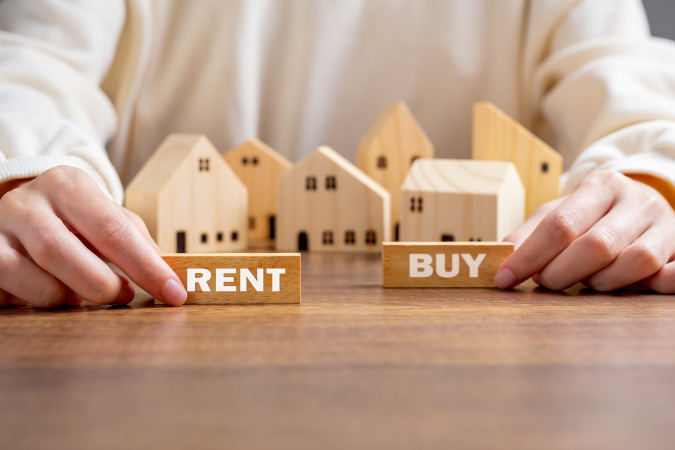
While purchasing a home can help you save on housing over time, the high initial cost of buying a house may force some to continue to rent.
The Rent vs. Buy Calculation
Is now a good time to buy a house or rent? The home price growth has begun to level off, and national rent averages are also expected to slow because of the market’s stabilization phase. Single-family rents may be expected to rise at an annual rate of 1.1 percent in December 2026, but this rate would still be a major slowdown compared to the rapid increases of recent years.
Purchasing a home can ultimately help you save on housing costs over time. Your principal and interest payments are locked in with a fixed-rate mortgage for 15 to 30 years, which shields you from rent inflation and rising interest rates.
| Q: What salary do you need for a $400,000 house? A: To afford a $400,000 house, you will need an annual income of at least $106,000. |
Tax Benefits
The tax code remains a primary driver for home buyers in 2026 due to new legislation such as the “One Big Beautiful Bill” (OBBBA), which alters deductions for homeowners significantly. The cap on state and local tax deductions continues to rise — as much as $40,400 in 2026 — which is a huge relief for homeowners and those buying a house in retirement in high-tax states like New York and California.
Opportunity Cost of a Down Payment
Is now a good time to buy a house for someone in debt? While a high down payment within the process of buying a house reduces monthly mortgage payments, it can lead to strains elsewhere. For example, if you have high-interest debt on a credit card, you should probably focus on paying that down before you jump to making your down payment. A large down payment also reduces cash reserves, which leaves less flexibility for savings and emergencies.
| Q: Is it smart to buy a home right now? A: To buy a home right now, you must be in the right financial state. The 28/36 rule is a smart strategy to follow — meaning housing costs shouldn’t exceed 28 percent of your monthly gross income, and debt payments shouldn’t exceed more than 36 percent of your total budget. |
Make Your Move to a New Home With PODS
So, is now a good time to buy a house? The answer ultimately depends on your financial preparedness and plan to stay for the long-term.
When you’re ready to buy, make the move to your new home flexible with a portable moving container from PODS. Have a container delivered right to your driveway, where you can load it on your own schedule. Need some help with the heavy lifting? PODS can connect you with local packing and loading services. Your container will be picked up and delivered to your new home when you’re ready. Need more time? Keep it in a secure PODS Storage Center until you’re ready for it. One month of storage is built into the cost of every move, so you don’t have to feel rushed.
Visit PODS online for a free local moving quote or call 877-350-7637 for long-distance moving.
*This article was written on behalf of PODS Enterprises, LLC (“PODS”). PODS does not warrant the completeness or accuracy of any information contained in this article and disclaims any liability for reliance upon the content herein.

Your quote in 60 seconds
Get pricing tailored to your needs!