Moving to Savannah, GA: A Guide To Life in the Hostess City
SavannahGeorgia
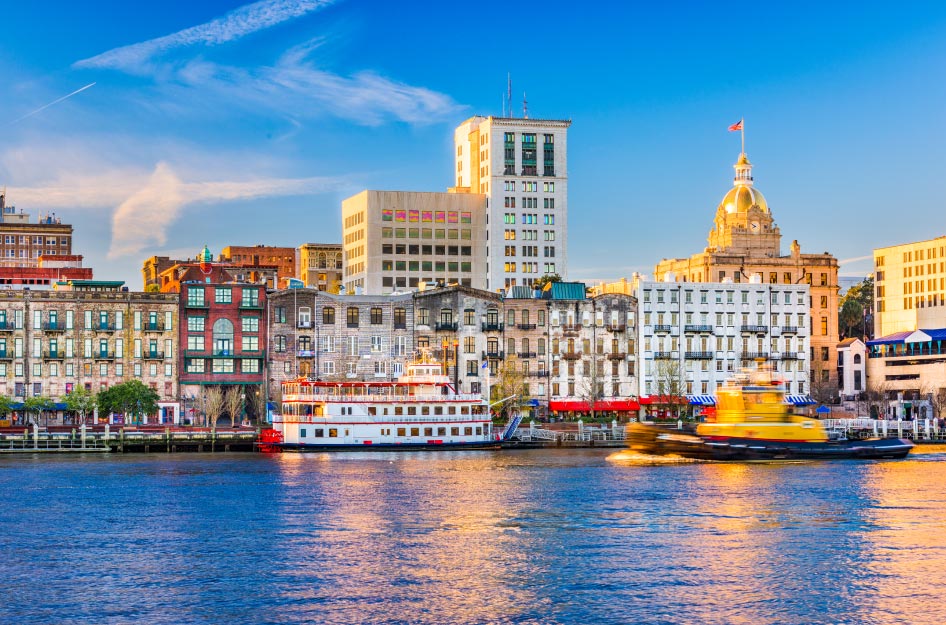
Life is like a box of chocolates … Did you know one of Forrest Gump’s most famous scenes was filmed in Savannah’s own Chippewa Square? If you’re considering moving to Savannah, GA, you’ll find that the city beyond Forrest’s park bench blends historic charm with a laidback coastal lifestyle and a cost of living that may surprise you. From its moss-draped squares and lively arts scene to its growing economy and distinctive neighborhoods, there’s a lot to explore before making the Hostess City your next home.
What is Savannah Known For?
Savannah isn’t just a beautiful city, although those famous springtime azaleas are what dreams are made of. It’s also a place where historical architecture, top-notch culture, and even trendy shopping options converge — with plenty of Southern hospitality to boot.
The city is best known for its 23 squares: Leafy, walkable green spaces framed by elegant homes, churches, and centuries-old architecture that give Savannah a distinctive charm you won’t find anywhere else. As Georgia’s oldest city, it was a British colonial capital in the 1770s, and, thanks to its strategic location, became an essential port during both the American Revolution and the Civil War. Even now, Savannah is an important Atlantic seaport (the fourth-largest container port in the U.S.) and an industrial center for modern America.
Moving to Savannah, Georgia, also means entering one of the nation’s most haunted cities. Historic cemeteries and centuries-old homes and businesses add a spooky vibe to the Southern accents. Landmarks like the Mercer-Williams House, made famous by the book and movie Midnight in the Garden of Good and Evil, have fueled Savannah’s eerie mystique and boosted tourist traffic exponentially since the mid-1990s. To immerse yourself in the city’s dark history, we recommend the Genteel & Bard nighttime walking tour (pro tip: Dogs are welcome, but leave the kids at home with a sitter).
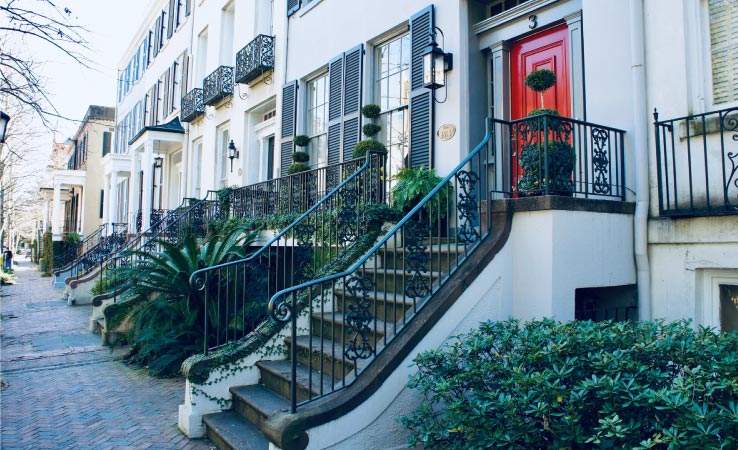
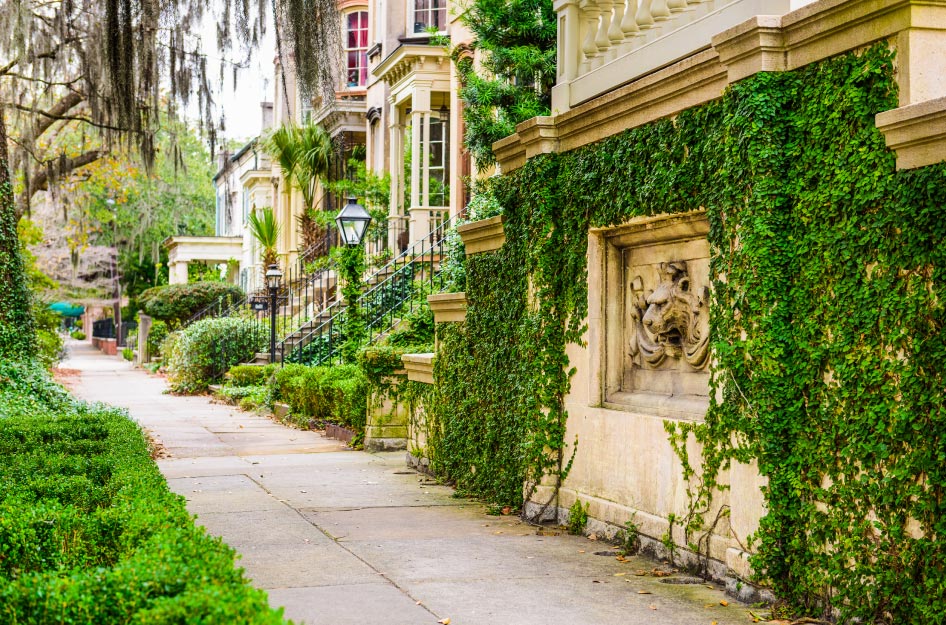
Moving to Savannah, Georgia, comes with no shortage of charm, including rows of classic townhomes.
(Source: Philip Arambula via Unsplash)
8 Things To Consider Before Moving to Savannah, GA
Apparitions aside, Savannah is a warm, welcoming city. The rich history, curiosities, and activities for all ages add up to an ideal destination for families, young professionals, and even retirees looking for a laid-back Southern lifestyle. If you fit that description, here are a few things to know about Savannah before you pack up and head to the coast.
1. Savannah’s Cost of Living and Housing Are Surprisingly Affordable
The cost of living in Savannah is a major draw — even more so when you consider it’s a popular seaside tourist destination — at 9.8 percent lower than the national average and 4.6 percent lower than the rest of Georgia. Housing is reasonable, too, with the average home priced at $326,500 compared with the U.S. average of $366,000. Of course, that can vary depending on your choice for where to live in Savannah, Georgia; some of the local coastal estates and stately historic mansions can run into the multimillions.
2. Tourism and the Port of Savannah Shape the Job Market and Local Economy
As for jobs, the Port of Savannah keeps the economic engine humming as a major employer (651,000 jobs statewide). The city’s overall unemployment is at an impressively low 3.1 percent compared with the national average of 4.3 percent. The most resilient industries include aerospace, manufacturing, and healthcare. The largest metro employer, Gulfstream Aerospace, has about 19,000 employees.
3. Georgia’s Tax Structure Is Favorable for Many Residents.
The Peach State has fairly moderate state income and property taxes compared with other states, ranked a respectable No. 18 on the State Tax Competitiveness Index. A recent shift to a flat individual income tax, at 5.19 percent and scheduled to reach 4.99 percent by 2028, is viewed as a positive. Homestead exemptions and tax breaks on retirement income round out the generally appealing tax picture — another reason moving to Savannah, GA, is a smart step.
4. Savannah Stays Warm Year-Round
And by warm, we mean hot, muggy summers, mild winters with little to no snow, and about 40 inches of rain annually. The lowest lows in January sometimes dip to about 39 degrees. In July, the heat can soar to an oppressive 91 degrees. But there’s a payoff: In the springtime, azaleas and dogwoods light up the city with color and fragrance. And in the fall, leaf-peepers can escape to the North Georgia Mountains, just a few hours away, when the temps turn cooler.
5. Neighborhoods in Savannah Offer Character and Distinctive Charm
Where to live in Savannah, Georgia, depends on your lifestyle, budget, and the amenities you consider must-haves. Here are four standout neighborhoods that show the breadth of offerings across the Hostess City:
Historic District
The heart of Savannah’s cobblestone streets and elegant homes makes the district the perfect place to live if you want to be in the middle of it all — including tourist traffic. Arranged in a grid around the city’s famed squares, the neighborhood is home to about 10,000 people who live in gorgeous restored homes, historic row houses, and a smattering of condos. A main draw for visitors is the lively River Street, where converted cotton mills are now home to about 70 restaurants, bars, and boutiques.
Ardsley Park
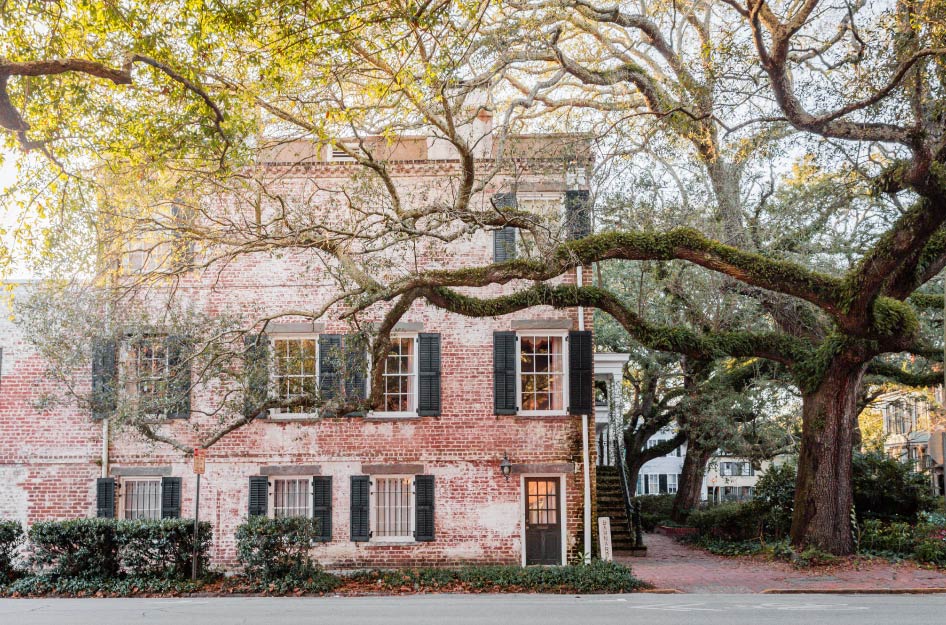
It’s hard to consider moving to Savannah, GA, without encountering the city’s rich history in some way, and Ardsley Park is no exception. Homes here date from the 1910s to the 1930s in all kinds of architectural styles, spacious and well-tended, lining shaded streets just four miles from downtown. And residents don’t have to give up Savannah’s iconic squares: Ardsley has 11 green spaces and parks where neighbors gather for walks, picnics, and community celebrations.
Tybee Island
This laidback beach town is about 20 minutes from downtown — but a world away. Retirees love Tybee’s slower pace and seaside vibe, with Low Country cuisine on practically every corner and a vacation atmosphere all year long. Seafood lovers can not miss The Crab Shack, a waterfront gem where everything’s practically right off the boat. About 3,000 people live in Tybee year-round in a mix of historic beach cottages, modern waterfront condos, and inland ranch-style homes. Savannah locals take advantage of the town, too — there’s no shortage of day trippers on any given weekend.
Starland District
In the late 1990s, two Savannah College of Art and Design students renovated the abandoned Starland Dairy complex, creating gallery spaces and a community hub for artists and entrepreneurs in the former milk processing plant. Today, the neighborhood that grew around that project has become a creative hub, attracting a mix of students, young professionals moving to Savannah, GA, and longtime residents in an eclectic district about two miles from downtown. Renovated historic homes, modest bungalows, and newer apartments share the streets with a lively mix of galleries, vintage shops, restaurants, and bars.

Home of the Savannah College of Art and Design (SCAD), the city’s cultural offerings run the gamut from contemporary galleries to the Telfair Museums.
(Source: Pavel Danilyuk via Pexels)
6. Savannah’s Creative Spirit Is Thriving
Anchored by the acclaimed Savannah College of Art and Design (SCAD), the city’s cultural offerings run the gamut from contemporary galleries to the Telfair Museums, one of the oldest public art museums in the Southeast. Savannah comes alive during events like the Savannah Black Heritage Festival, the Savannah Music Festival, and the SCAD Savannah Film Festival, which draw artists, performers, and visitors from around the world every year.
For live performance, the historic (of course!) Lucas Theatre for the Arts and the Savannah Theatre are downtown destinations. Live music is easy to find throughout the city, especially along River Street and in the Historic District, while indie acts take the stage at The Wormhole in the Starland District.
7. Savannah Is a Food Mecca
When it comes to cuisine, Savannah has joined the ranks of the nation’s elite. Some tried-and-true tourist faves include The Grey, a unique culinary experience inside a 1930s Greyhound Bus Terminal, and the famous Pirates’ House, a meeting place (including spirits, according to locals) since the 1700s. The Olde Pink House is another fine dining staple of Savannah, specializing in Southern cuisine.
Newer, innovative hotspots are popping up in Savannah all the time, though. A few examples: Joe and Vera’s is the latest endeavor from Chef Tim Fitzgerald of Savannah’s The Grey and NYC’s Michelin-starred Per Se. For comfort food, The Laundry Diner is unmatched. Untitled serves Japanese-inspired small plates and inventive craft cocktails, and Fishbar’s live-fire menu sets a new standard for seafood.
8. Walkability, Bikeability, and Ferries Make Getting Around Savannah, GA, a Breeze
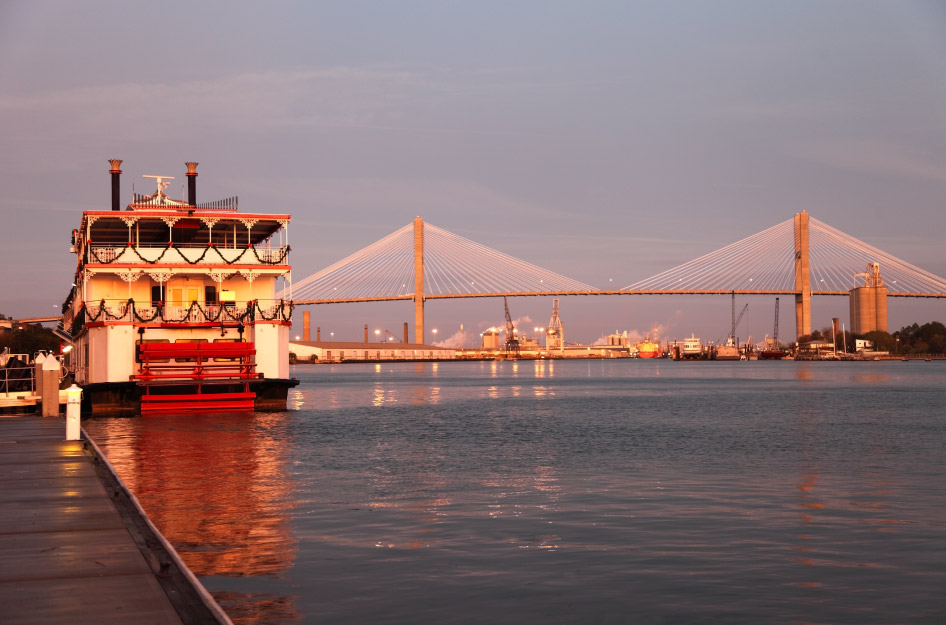
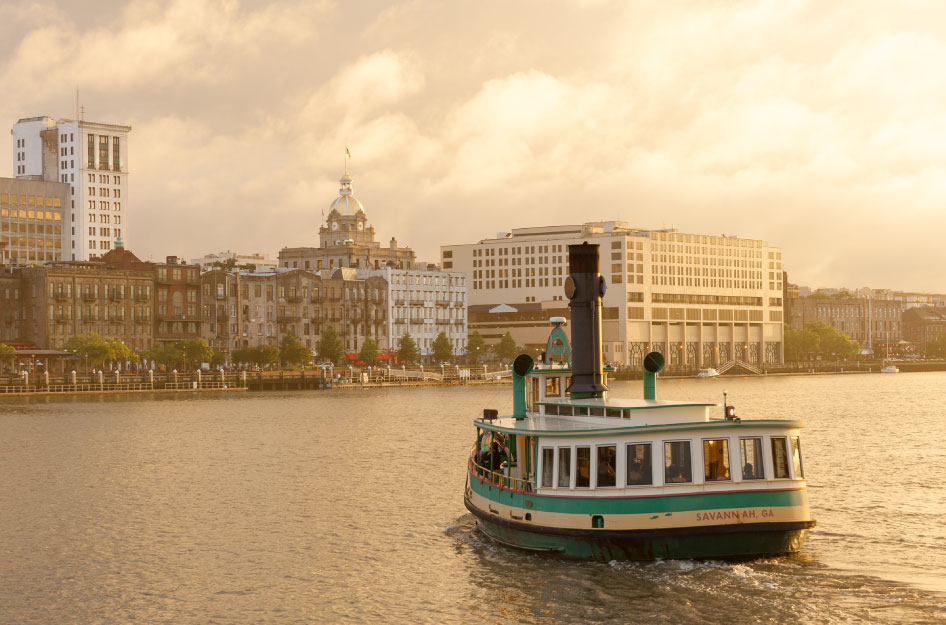
The city’s compact layout makes it highly walkable and bike-friendly. The fare-free DOT (Downtown Transportation) shuttle loops around town, making it easy to go car-less, and the Savannah Belles Ferry connects River Street to Hutchinson Island, where you can enjoy a few rounds of golf or take meetings at the newly expanded Savannah Convention Center. For longer trips, Chatham Area Transit (CAT) buses serve the broader region, but many residents still prefer to rely on cars for commuting.
3 Top Tips for Moving to Savannah, GA
Moving to Savannah comes with a few quirks you might not find in other cities, from historic district logistics to some weather challenges. Keep these considerations in mind for a smoother experience.
1. You’ll Need a Permit for Your Moving Truck
Narrow, historic streets and limited space can potentially complicate moving to Savannah, GA — and that’s just for starters. Savannah requires both a city permit and a Georgia Department of Transportation permit for an oversized vehicle. The police and the Park & Tree Department will review your application and provide tree-trimming and an “electrical escort,” for a fee, to help you navigate through the city. (As if you didn’t know it before, Savannah’s not kidding around when it comes to preservation.)
2. Avoid Moving During Major Festivals
It’s not called the Hostess City for nothing: Savannah likes to party. The St. Patrick’s Day Parade is legendary (the third-largest behind NYC and Chicago), so it’s not a good idea to schedule your move for that day — but really, why would you want to do anything other than celebrate on March 17? And that’s not the only Savannah festival: Check the calendar well in advance to plan around other events and holidays that might involve dancing in the streets.
3. Consider the Heat and Humidity When You’re Moving to Savannah, GA
If possible, plan to move sometime other than summer, when the humidity can make you feel like you’re breathing mashed potatoes. Barring that, start loading the truck or portable moving container early in the morning to miss the worst of the heat. And no matter when you move, stay hydrated.
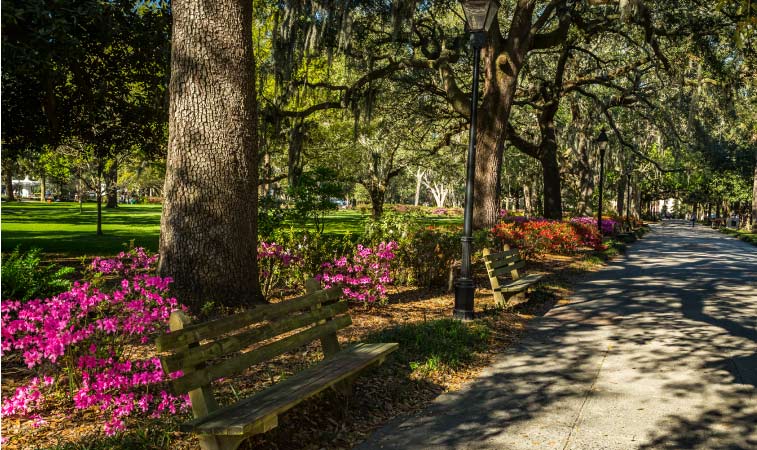
After moving to Savannah, GA, be sure to check out Forsyth park —a beloved common that stretches over 30 acres in the Historic District.
3 Tips for New Residents of Savannah, GA
1. Prepare Early for Hurricane Season — and the Weather Overall
You’re on the coast now, which means hurricanes are a real consideration from June 1 through Nov. 30. New residents need to find out their evacuation zone, register for local alerts, and prep a hurricane kit with basics like water, non-perishable foods, batteries, and important documents. Even if a storm doesn’t hit Savannah directly, heavy rain and wind can take a toll, so it’s smart to be ready. It’s also wise to check flood zone maps, drainage info, and insurance requirements before you make any buying decisions. The city’s low elevation makes some areas more vulnerable than others.
2. Start With the Squares and Forsyth Park
Savannah’s remaining 23 iconic squares are the heart of the city, designed to be each neighborhood’s “living room” for family walks, games and activities, and community events. Forsyth Park, while not a square, is a beloved common that stretches over 30 acres in the Historic District. Along with green spaces shaded by stately oaks, the grounds are home to a playground, cafe, bandshell, and the Forsyth Farmers Market every Saturday from 9 a.m. to 1 p.m. — year-round, rain or shine.
3. Learn Savannah’s Local Laws —- Including Rules About Booze
Did we mention Savannah’s a party town? It’s also one of the few U.S. cities where open containers are allowed, but getting around Savannah, GA, with a cocktail has guidelines: Keep your booze in a plastic cup, drink only within marked boundaries, and behave. It’s also worth a reminder that Savannah places a premium on preservation and public order, so get to know regulations early to avoid fines and blend in like a local.
Living in Savannah, GA — FAQs
Q: What’s it like to live in Savannah, Georgia?
A: Living in the Hostess City means slowing down and enjoying the details from moss-draped oaks (but don’t touch the moss!) to the vibrant food and arts scene. Savannah is a place where everyday life is infused with history, Southern charm, and ever-present tourists.
Q: What salary do you need to live in Savannah, Georgia?
A: Savannah (and Georgia, in general) has a lower cost of living than the national average. The MIT Living Wage Calculator suggests an annual income of $51,900 to support a single adult with no children — close to the citywide median income of $57,137 per household. Generally speaking, you’ll need to consider your own standard of living, interests, and activities before calculating how much you need to live in the style you’d like.
Q: Is it better to live in Savannah or Charleston?
A: That’s like asking someone to name their favorite child! These two coastal Southern cities are similar in a lot of ways, but there are distinctions. Savannah tends to be more laidback and affordable, while Charleston leans toward upscale, polished, and pricy.
Q: What areas to stay away from in Savannah, GA?
A: Every city has its flaws — even a historic beauty like Savannah. Newcomers can be especially vulnerable, so it’s a good idea to do some research and find your comfort zone. Law enforcement data shows the top three areas for overall crime as Yamacraw Village/West Savannah, Cuyler-Brownville, and Waters Avenue Corridor/Midtown. Locals also say it’s wise to stay off the streets of the Historic District late at night.
Q: Why is Savannah so cheap?
A: “Cheap” might not be the right word, but Savannah definitely boasts relative affordability. Even as a major tourist destination, the Hostess City generally avoids the luxury-driven market, with the economy instead tied to the port. Housing, too, is less expensive than in other similar cities. With room to expand geographically, Savannah has the opportunity to build more housing, which helps keep prices somewhat in check.

PODS makes moving to Savannah, GA, flexible with a portable moving container delivered right to your driveway.
Moving to Savannah, GA, With PODS
From its historic charm to its affordability and Southern coastal lifestyle, Savannah may be calling your name. When you’re ready, PODS can make moving to Savannah, GA, flexible with a portable moving container delivered right to your driveway. One month of storage is built into the cost of every move, so there’s no need to feel rushed. Need help with the heavy lifting? PODS can refer you to local packing and loading services to lend a hand.
Visit PODS online for a free local moving quote or call 877-350-7637 for long-distance moving.
Ivonne Spinoza is a freelance writer and a frequent contributor to the PODS Blog. Her work has appeared in Matador Network, PBS’ Independent Lens, and The Chicago Tribune, among others. When she’s not snuggling her cats, she’s either Kondo-ing someone’s life or fighting jet lag at some airport.
Editor’s note: For ease of reading, monthly rental prices were rounded to the nearest $25 and home values were rounded to the nearest $100.
*This article was written on behalf of PODS Enterprises, LLC (“PODS”). PODS does not warrant the completeness or accuracy of any information contained in this article and disclaims any liability for reliance upon the content herein.

Your quote in 60 seconds
Get pricing tailored to your needs!
Related Articles