
16 Things About Living in Minneapolis You Must Know Before Moving
MinneapolisMinnesota

TL;DR: Living in Minneapolis
|
So you want to move to Minneapolis? We don’t blame you. We love the combination of big-city amenities, good food, history, and midwestern heart that this city has to offer. Heck, we love living in Minneapolis so much that we don’t even mind the notorious winter weather — and neither do residents. They are outside all year, taking advantage of this uber-green city’s many parks, lakes, and culture.
| Planning a move to greater Minneapolis-St. Paul? Start by getting a free moving quote from PODS. |
Minneapolis may be one-half of the famous Minneapolis-St. Paul duo, but this city stands out on its own. Read on to see why living in Minneapolis, MN, might have you asking, "St. Paul who?"
Minneapolis at a Glance
- Minneapolis is located in the central eastern area of Minnesota and is bisected by the Mississippi River. The closest major metropolitan city is Chicago, which is a six-hour drive southeast.
- With a population of over 430,000, Minneapolis is Minnesota’s largest city.
- A growing tech scene and popular university help draw younger residents, putting the median age around 33.
- According to the most recent census information, the population breaks down as 60.3% White, 18.8% Black, 10.1% Hispanic/Latino, 5.3% Asian, and 9.9% of people with two or more races.
| Q: Is Minneapolis a good place to live? A: Wondering, “Is Minneapolis a good place to live?” Absolutely! When it comes to Twin Cities living, it can’t be beat. In fact, you can expect a great quality of life in Minneapolis, with its endless supply of parks and outdoor activities, numerous gorgeous lakes, and mouthwatering food scene — among many other things. |
1. The Cost of Living in Minneapolis Is Probably a Little More Than You Think
You may be surprised to learn that the cost of living in Minneapolis is just over 7 percent higher than the national average index. Salaries, home prices, and taxes are higher than average, as well.
- At $1,581, the average weekly income in Minneapolis is about 1.4 percent higher than the national average of $1,560, according to the U.S. Bureau of Labor Statistics (as of July 2026). When you convert that to yearly wages, the average income in Minneapolis is $82,212, compared with the national average of $81,120 (before taxes).
- The city’s taxes are relatively high across the board, which contributes to the cost of living in Minneapolis. People may avoid paying tax on clothing, but the tax on income (between 5.35 and 9.85 percent; average 7.46 percent), sales (9.03 percent), meals (up to 10.77 percent), and other things like lodging, entertainment, and liquor, more than make up for it.
- The largest employers in town include the Mayo Clinic, Target, Allina Health, Cargill, the University of Minnesota, and the federal government. Despite the metro area’s relatively smaller size, it’s currently home to 17 Fortune 500 companies.
| Q: What salary is needed to live comfortably in Minneapolis? A: While $80,000 is certainly a good salary in Minneapolis, a family of two working adults and two children would require about $140,844 annually to cover basic living expenses, according to the MIT Living Wage Calculator. A single adult with no children needs to make around $51,000 annually before taxes to have their basic needs met when living in Minneapolis. However, if you want a more comfortable lifestyle, life in Minneapolis will likely require a salary that’s well into six figures. |
2. The City Is Pretty Evenly Split Between Renters and Homeowners
The areas in Minneapolis tend to be defined by their proximity to downtown. Naturally, the more expensive areas to live in the city will be surrounding the downtown area, where all the action is. Not ready to purchase a home and want to know what Minneapolis is like for renters? According to Niche, residents in Minneapolis are almost equally split: 48 percent of residents own their homes, and 52 percent are renters.
The average rent for a one-bedroom apartment runs around $1,525 a month, and you can expect them to be about 700 square feet, on average. On the other side of the coin, Zillow puts the average home value in Minneapolis at $336,600.
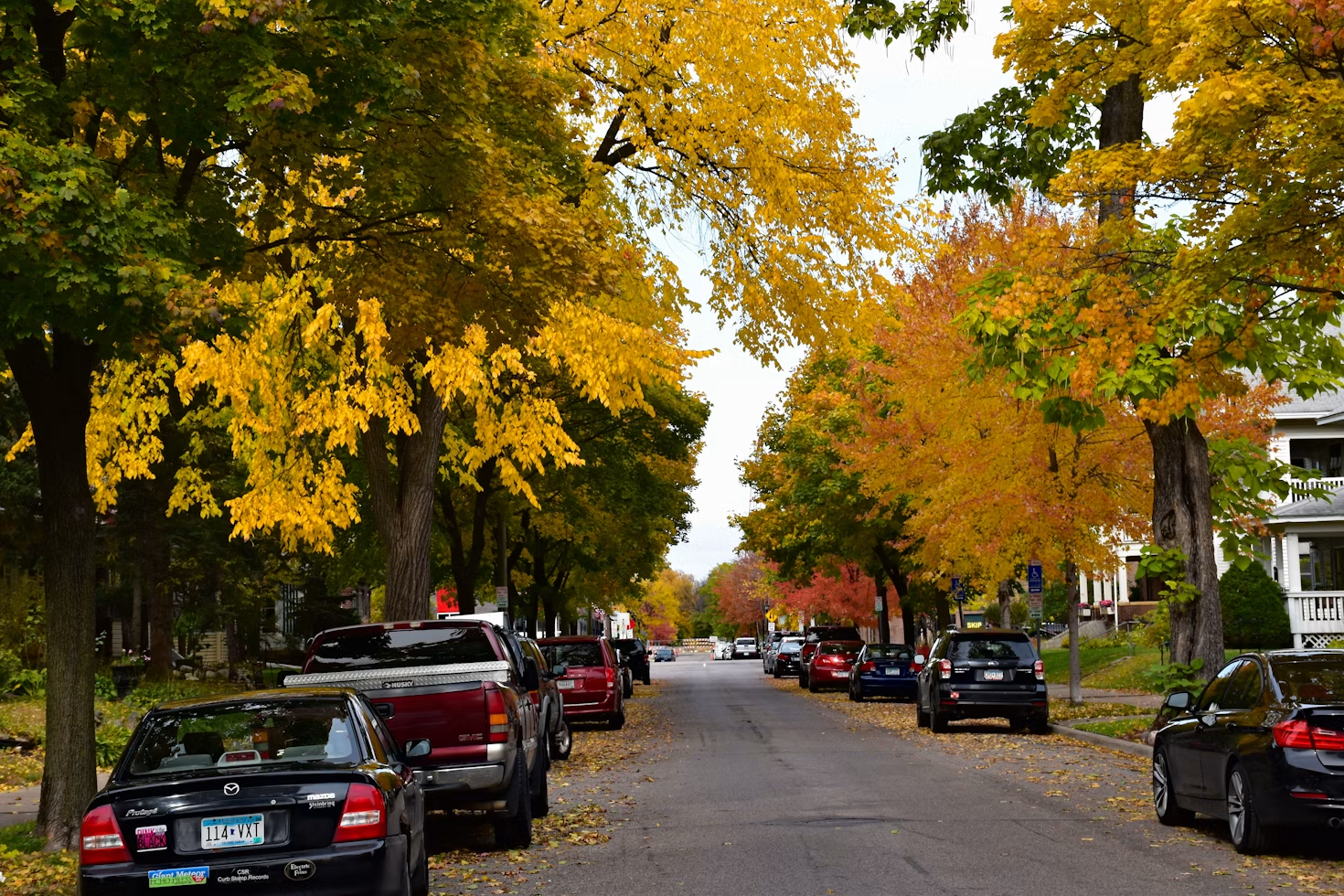
Which is the best neighborhood in Minneapolis? That depends on what you're looking for.
(Source: LeNor Barry via Unsplash)
3. Here Are the Top Three Best Neighborhoods To Live in Minneapolis
Asking yourself, “Where should I move to in Minneapolis?” Well, when it comes to living in Minneapolis, here are three areas that consistently rank among the top choices with real estate pros and residents:
Loring Park
Living in the downtown-adjacent Loring Park gives you easy access to annual events and festivals, a chill family-friendly vibe, and some seriously stylish greenery. Along with the actual greenspace (complete with a large, lovely pond), Loring Park is home to the Minneapolis Sculpture Garden, an iconic local attraction. Adjacent to the garden, the Walker Art Center is one of the nation’s premier art museums, known for its extensive collection of contemporary works, groundbreaking exhibitions, and innovative programming. While you’re there, look for Spoonbridge and Cherry, the giant cherry-topped spoon that’s become one of Minneapolis’s most recognizable landmarks.
Central Business District
The heart of the city beats strong in the Central Business District. It’s where you’re likely to start and end the night, and it’s best for folks who thrive on urban energy and want to be within walking distance of restaurants, theaters, live music venues, sporting events, and the Mississippi Riverfront. You’ll also have easy access to the 9.5-mile Minneapolis Skyway System, one of the delights of living in Minneapolis, which allows pedestrians to get around without having to set foot outside. (You’ll understand in January.)
Northeast
This area is split into two distinct sections, the Arts District and Riverfront District, where historic warehouses, longtime local businesses, and an industrial vibe blend with hip breweries, independent galleries, and a growing population of young professionals. It’s the perfect place for folks who love a little history mixed with modern amenities. And with the Mississippi River running along its western edge, it’s also one of the city’s best places to catch a stellar sunset.
A Few More Good Spots To Add to Your Minneapolis Home Search:
4. Crime and Safety Are Serious Concerns in Minneapolis
Is Minneapolis safe? Like any major metro, Minneapolis has neighborhoods with higher crime rates and others that are considered very safe. While NeighborhoodScout gives the city an overall index of 1 (meaning it is safer than only one percent of comparable U.S. cities), crime is concentrated in certain areas rather than spread evenly throughout the city. It’s important to research individual neighborhoods to find one that works for you.
| Q: What is Minneapolis ranked in quality of life? A: Life in Minneapolis is pretty great — and the city has the awards and accolades to prove it. For starters, Minneapolis is ranked No. 3 for Best Big City Park System, thanks to its parks’ amenities, accessibility and equity, and total acreage, among other measures. Minneapolis is also ranked No. 8 among best U.S. cities for small businesses, and it’s the runner-up for Best Beer City (35 breweries just within the city limits!). The North Star State rakes in the honors, as well: Minnesota was named the state with the highest quality of life in 2026 by the State of the Nation Project, based on metrics like high voter turnout, volunteerism, and work-life balance. |
5. There’s Cold, and Then There’s Minnesota Cold
Think you know cold? Try living in Minneapolis. Winters in Minneapolis don’t mess around, with a high of 24 degrees Fahrenheit and a low of 8 degrees Fahrenheit in January, the coldest month. The coldest temp recorded was a blood-freezing -34 degrees, with an unfathomable windchill of -67 degrees, back in 1936. But don’t be surprised when you see hardy Minneapolis folk out and about even in the frostiest depths of January. Outdoor recreation doesn’t take a winter break around here.
One caveat for cold weather fun: If you’re not used to driving on snow or ice, don’t do it until you get some guidance. In the meantime, make sure your vehicle is prepped and outfitted with the appropriate tires and an emergency kit. You’ll also need proper winter gear to keep your body warm and dry when you venture outside — just a walk to the car can be a bone-chiller, so don’t scrimp on those hats, scarves, and gloves. But come spring and summer, the city is glorious, with temps from the high 60s to mid-80s and the sun shining bright; you’ll finally be able to answer the question: “Is Minneapolis a good place to live?”

Folks living in Minneapolis are an outdoors-all-year kind of people.
(Source: Weston M via Unsplash)
6. Living in Minneapolis Means Experiencing a Year-Round Outdoor City
Folks in Minneapolis are an outdoors-all-year kind of people. In fact, they even have an entire festival devoted to enjoying the chilliest months of the winter. There’s also ice skating, ice climbing, and ice fishing in the winter; annual harvest festivals and leaf peeping in the fall; fresh farmers’ markets and baseball games in the spring (go Twins!); and barbecues, fireworks, and lake watersports in the summer.
It probably helps that 98 percent of all people in Minneapolis live within a 10-minute walk of a park. Yes, really. From neighborhood playgrounds to lakeside trails, green space is a part of daily life here — no matter what the season.
| Fun Fact: Rumor has it that the beloved Twin Cities moniker did not originally apply to St. Paul, the current burg known as Minneapolis’s sibling city. Minneapolis was first paired up and nicknamed with the nearby city of St. Anthony. |
7. The Locals Can Be Hard to Crack
The Minneapolis social scene may be pumping, but locals are known for keeping to themselves — that’s just part of the vibe. “Minnesota nice” may make Minneapolis, Minnesota, sound like a place full of cuddly, warm extroverts, but it really means that while people here are courteous, they’d rather be left alone until you earn their trust.
That said, locals are friendly if you give them time, and you’ll find plenty of fresh faces around town to bond with, too. Need more specific ideas for meeting new people while living in Minneapolis? Consider a home or apartment close to downtown, a hub of activity undergoing (another!) transformation.
| Q: What are the cons of living in Minneapolis? A: If you’re considering living in the Twin Cities, be prepared for cold weather. The average high temperature in Minneapolis in January is a whopping 24°F, with a low of eight. You’ll also want to be aware of the phenomenon known as Minnesota Nice, which doesn’t mean what you probably think it means. And though summers here are delightful weather-wise, the season also brings swarms of most unwelcome visitors, necessitating what’s known as the Mosquito Forecast. Is Minneapolis safe in the summer from these pests? All we can say is: Forewarned is forearmed. |
8. Minneapolis Is Known as The City of Lakes
One of Minnesota’s nicknames is “The Land of 10,000 Lakes” — which is an understatement. The North Star State is home to about 12,000 lakes, with 22 of them located within Minneapolis city limits. The most popular is the Chain of Lakes, the five largest lakes in town, where locals spend time canoeing, sailing, waterskiing, playing ice hockey, ice windsurfing (yes, it’s a thing), and more.
| Fun Fact: Minneapolis has many more monikers ... the Mill City, MPLS, The Mini-Apple, Miniature-polis, and Pickleville, to name a few. |
9. There’s More to the Minneapolis Food Scene Than Tater Tot Hotdish
No shade to the Tater Tot Hotdish or its fans — the frigid temps of Minneapolis were made for hearty foods that comfort you like a warm hug. But don’t let that one dish make you think the Minneapolis food scene is basic. Dining here is world-class. You know who agrees? The James Beard Foundation. Both Ann Ahmed (Khaluna) and Alex Roberts (Alma) are nominated for Outstanding Chef of 2026, and Bar La Grassa has made the nom list for Outstanding Restaurant.
10. Schools in Minneapolis Are Above Average.
Niche gives Minneapolis’s public schools an overall B- grade, though there are outliers. North Woods Elementary School was named the No. 2 best public elementary school in the state, while Nova Classical Academy Upper School is ranked as the No. 3 best charter high school in Minnesota and No. 1 overall for Ramsey County. As for higher learning, U.S. News & World Report put the University of Minnesota (Ski-U-Mah!) Twin Cities at No. 26 on its list of 2026 Top Public Schools.
Planning a move to Minneapolis?
|
11. You Can Walk Through the Sky (Sort Of)
Most people get around by car, but Minneapolis walkability and bikeability are both pretty decent. There’s also a reliable public transit network via bus and light rail (though you’ll need to plan ahead or use a rideshare if you’re out and about late at night). The average work commute for someone living in Minneapolis, MN, is about 23 minutes.
One unique way to get around the city? The Minneapolis Skyway System, a 9.5-mile elevated pathway that connects over 80 city blocks. It’s actually the largest continuous, second-level bridge walkway system in the world — and a godsend in winter.

A bonus to the Minneapolis winter temps is hard-frozen lakes, perfect for carving out a hole and casting a line.
(Source: Randy Fath via Unsplash)
12. You Can Bundle Up For a Minnesota Rite of Passage: Ice Fishing
Ice fishing is a classic Minnesota pastime that’s worth trying at least once if you’re feeling adventurous. Once the lakes freeze over, anglers spend their days on the ice, often in cozy heated shelters, hoping to hook the perfect walleye. If you decide to give it a try, be sure to check ice conditions and follow local safety guidance before heading out.
13. Minneapolis Is a City for Sports Fans
Root for the Minnesota Twins at Target Field, go courtside at a Timberwolves game, get riled up for Vikings football, or go puck wild with the NHL’s Minnesota Wild. If you’re not into pro sports, Minneapolis offers lots of adult rec league opportunities.
14. Make an Appearance at the Mall of America
That’s right, America’s mall is just a 15-minute drive from Minneapolis. Admittedly, this isn’t something locals generally clamor to do, but you’ve got to see this monstrous mall at least once. The place is so big, it has its own zip code! There are more than 500(!) stores and 50+ restaurants, plus attractions including the Nickelodeon Universe theme park, an aquarium, and the Crayola Experience. The Mystery Cove water park is set to open in 2029. Expect to get your steps in walking around all day, embrace the camp, and fill up your shopping bags.
15. Here Are 7 Can’t-Miss Things To Do in Minneapolis
Looking for more reasons to consider living in Minneapolis? Here’s a list of the top seven things to do in Minneapolis that you don’t want to miss.
1. Catch a Live Theater Show
Living in Minneapolis means you’re privy to one of the liveliest and most robust theater scenes in the country, so take advantage by catching a production (or several) at one of the many local theaters.
2. Go for the Gamble
Put it all on red just outside of town at Minneapolis’ two casinos, the Mystic Lake Casino and Little Six Casino. Why go to Vegas when you can be your best James Bond right in your own backyard?
3. Hit Up the Country’s Largest Open Studio Tour
Every May, Minneapolis hosts Art-A-Whirl, a weekend-long art walk in the Northeast neighborhood where hundreds of studios, galleries, shops, and individual artists open their doors to the public for tours.
4. Sink Your Teeth Into a Juicy Lucy
Perhaps rivaled only by the Tater Tot Hotdish, the chin-soaking, cheese-stuffed Juicy Lucy burger is a staple in Minneapolis — and the place to find it is Matt’s Bar and Grill in South Minneapolis, where it was invented.
5. Take Your Appetite For a Cruise Down Eat Street
Not sure what you feel like eating? Let your belly be your guide down the 17-block Eat Street, where you’ll find over 50 different places to satisfy nearly any craving and solve even the most stubborn bouts of appetite-indecisiveness.
6. Take an Architecture Tour
Minneapolis is full of gorgeous, historic architecture, and these tours will not only widen your eyes, but they’ll also give you a little back story to help get to know your new town.
7. Mess Around on the Mississippi
Frolicking in the most famous river in America is a popular pastime, so join in on the fun. Go on hikes, chase the rumble of a waterfall, sunbathe, fish, picnic, paddle, and more on the Mighty Mississippi — just don’t take this smack-in-the-middle-of-the-city natural waterpark for granted.
16. Is Living in Minneapolis Better Than St. Paul? Is Minneapolis Safe Compared to St. Paul?
If you are considering living in Minneapolis but you’re also drawn to St. Paul, here are some stats to help you get an overhead view of where you may want to live.
- St. Paul’s population (about 306,700) is smaller than Minneapolis’s (about 430,300).
- The cost of living in Minneapolis is 6.1 percent higher than in St. Paul. In fact, living in Minneapolis means paying a bit more for housing, groceries, and utilities.
- Is St. Paul or Minneapolis safer? St. Paul is considered safer than Minneapolis, per NeighborhoodScout data. St. Paul has a crime index of 5; Minneapolis’ is 1.
- Overall, St. Paul schools are right on par with Minneapolis schools — Niche gives both cities' public schools a B-.
- Rent is a tad cheaper in St. Paul compared to Minneapolis. The average rent for a one-bedroom apartment in St. Paul is about $1,400, while the average rent for a one-bedroom in Minneapolis is about $1,525.
- The average home value in St. Paul is $301,100, a smidge lower than in Minneapolis, which is $336,600.
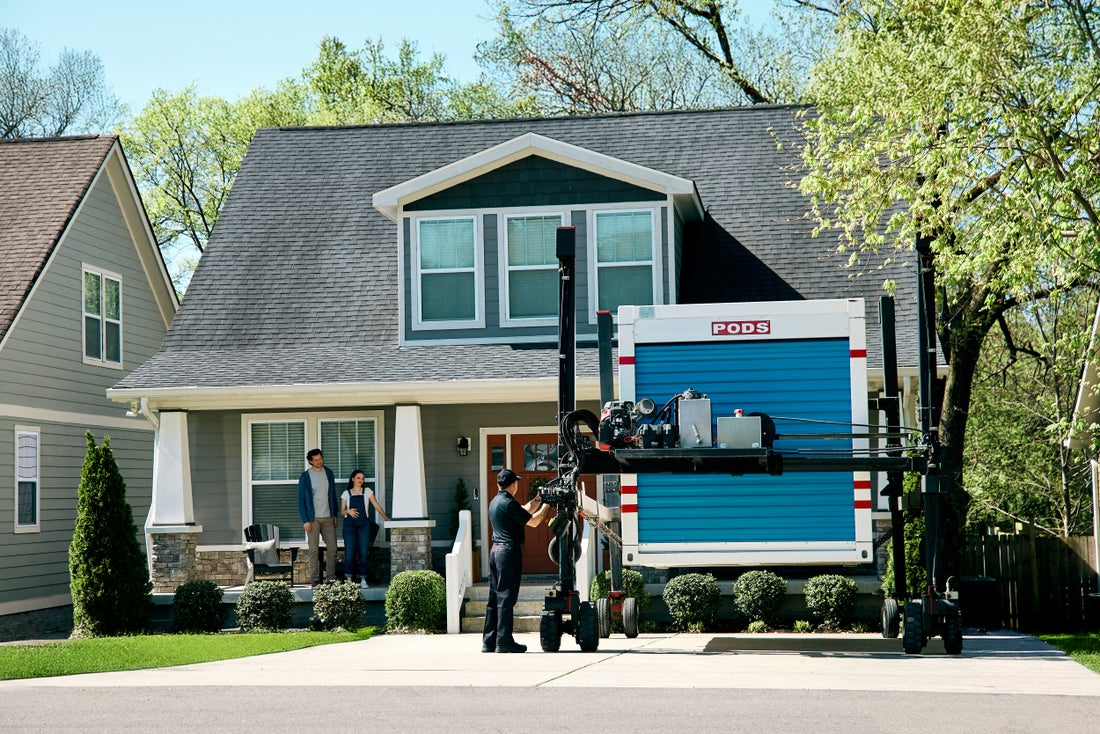
Make your move to Minneapolis easier with the help of PODS.
PODS Can Help You Move to Minneapolis
Ready to head for the Twin Cities? Make your move to Minneapolis flexible with PODS portable moving containers. PODS will deliver your container right to your driveway, where you can pack and load at your convenience, on your own schedule. And you don’t have to feel rushed, because one month’s storage is built into the cost of every move. Need a hand with the heavy lifting? PODS can refer you to local packing and loading services to help out.
Visit PODS online for a free local moving quote or call 877-350-7637 for long-distance moving.
Alex Keight is a frequent contributor to the PODS Blog who has moved 20+ times because she loves to experience new places.
Editor’s note: For ease of reading, monthly rental prices were rounded to the nearest $25 and home values were rounded to the nearest $100. Home values in the millions were rounded to the nearest $100,000.
*This article was written on behalf of PODS Enterprises, LLC (“PODS”). PODS does not warrant the completeness or accuracy of any information contained in this article and disclaims any liability for reliance upon the content herein.

Your quote in 60 seconds
Get pricing tailored to your needs!
Related Articles