Moving During Hurricane Season: How to Plan a Safe Coastal Relocation
Moving Tips and Hacks
TL;DR: Moving During Hurricane Season
|
Locking in a dream home in the Sunbelt is exciting, but a closing date during hurricane season makes it easy for all those moving plans to get blown off course. While moving to coastal areas now requires extra vigilance, moving during hurricane season is entirely safe if you back that “let’s hope for the best” attitude up with a solid strategy. That means understanding the ups and downs of hurricane season, taking extra precautions while packing, and ensuring you have established an essential disaster preparedness plan ahead of moving day. Our guide is here to help you through the logistics without losing your sanity (or furniture) to the elements.
The Hurricane Season Timeline: When and Where Are the Risks?
When is hurricane season in Florida (or anywhere for that matter)? The official season runs from June 1 through November 30. And it typically unfolds along this timeline:
- June 1 (the start): The season officially begins, though early storms tend to be weaker and less frequent.
- Mid-August to late October (the peak): Rising ocean temperatures and minimal wind shear drive the highest frequency and intensity of storms during this stretch, with activity cresting around mid-September, per NOAA.
- November 30 (the finish): The season officially wraps up, though lingering systems can occasionally form later.
Activity isn’t spread evenly across these six months — it builds toward that mid-August-through-October peak. If you’re scheduling a move to Florida or Texas, it’s best to avoid that window if you can, to protect you and your property.
High-Risk Zones and Metros
Certain regions demand a much higher level of atmospheric awareness:
- Florida’s coastlines: Florida’s coastal regions face threats from both the Atlantic Ocean and the Gulf of Mexico.
- Texas Gulf Coast: Moving to Houston in the summer means accounting for significant hurricane risks, heavy tropical downpours, and threats of localized flooding.
- The Deep Gulf: Low-lying areas throughout coastal Louisiana, Mississippi, and Alabama are exceptionally vulnerable to rapid storm intensification and massive storm surges.

When it comes to hurricane safety during a move, it’s important to keep up with the daily forecast and have a contingency plan in case of severe weather.
How to Plan a Move Around a Tropical System
The rule of thumb for moving during hurricane season is simple: Your moving schedule must remain completely flexible. Easy right? Well, if a tropical depression or a named storm begins tracking toward your route, logistics take a backseat. Your top priority shifts immediately to hurricane safety for both you and your family.
1. Monitor the Forecast Daily
Track live updates via the National Hurricane Center (NHC) in the weeks leading up to your move. If a storm approaches and you don’t evacuate early enough, do not try to outrun it on the highway. Driving a high-profile rental truck or towing a trailer through intense tropical crosswinds is incredibly dangerous.
2. Establish a Contingency Plan
If a hurricane forces a delay, a standard moving company might postpone your delivery by weeks because their trucks get rerouted or backlogged. Ask your provider about their severe weather cancellation policies and what steps they’ll take if you need to pause transit to focus on cleaning up your old or new homes, and especially if you end up remodeling after a natural disaster.
3. Secure Comprehensive Insurance Coverage
Don’t assume your standard homeowner’s insurance policy or a basic moving contract protects your items against natural disasters. Verify that your moving insurance explicitly covers “acts of God,” wind damage, and water intrusion during transit or temporary storage.
Coastal Packing Tactics: Defeating High Humidity and Moisture
In places like Houston, New Orleans, or Miami, there doesn’t need to be a Category 4 storm to ruin your belongings — the coastal humidity can do it for you. When items are trapped inside a hot moving vehicle, moisture can trigger mold and mildew growth in less than 48 hours.
To safeguard your items, take a few extra precautions:
- Ditch cardboard for plastic: Use heavy-duty plastic storage bins for electronics, clothing, important documents, and linens. Cardboard absorbs moisture from the air, weakening it structurally and trapping humidity inside.
- Wrap smart, not just tight: Use moving stretch wrap to protect wooden furniture, but make sure items are completely dry before wrapping. Trapping moisture beneath plastic wrap against a wooden surface creates a perfect greenhouse for mold.
- Deploy silica gel desiccants: Toss industrial-strength moisture-absorbing packets into every single container to keep your boxes dry.
- Elevate your storage: If you must leave packed items in a garage or ground-level room during the transition, stack them on plastic pallets to protect them from minor flash flooding or water seepage.
Implementing these proactive packing habits is just as critical as taking steps to protect your home from wind damage before those first outer bands arrive.
Moving During Hurricane Season — FAQs
Q: What’s the worst month for hurricane season?
A: September is statistically the most active month of the season. Data tracked by the NHC shows that the peak of the Atlantic hurricane season happens on September 10, mostly driven by hot ocean temperatures and minimal wind shear.
Q: Can a concrete house withstand a Category 5 hurricane?
A: Yes, a well-built concrete house can hold up against a Category 5 hurricane, but “concrete” alone isn’t enough. Per building guidelines from the Insulating Concrete Forms Manufacturers Association (ICFMA), the walls need to be properly reinforced and engineered as one connected structure, capable of resisting winds well over 200 mph. You’ll also need impact-rated windows and doors and a reinforced roof, so the whole house can withstand pressure from every direction, not just the walls.
Q: Where is the safest place to go in your house during a hurricane?
A: The safest location is a small, interior room on the lowest floor of the structure, such as a hallway, closet, or bathroom, away from all windows, skylights, and exterior doors. This aligns with standard residential shelter guidelines established by the Federal Emergency Management Agency (FEMA).
Q: Should I fill my bathtub with water during a hurricane?
A: Yes. Filling your bathtub gives you a backup water supply if the power goes out or water lines break, according to Ready.gov, the government’s disaster-preparedness site. You can use that water to flush toilets, wash your hands, or clean dishes — just don’t drink it unless you’ve purified it first.
Q: Do moving companies cancel if there is a hurricane?
A: Each moving company has its own set of safety standards, but yes, professional moving companies will suspend operations and cancel or reschedule scheduled bookings if an active hurricane or tropical storm warning is issued for your origin, route, or destination. Check with your provider to get all of your options.
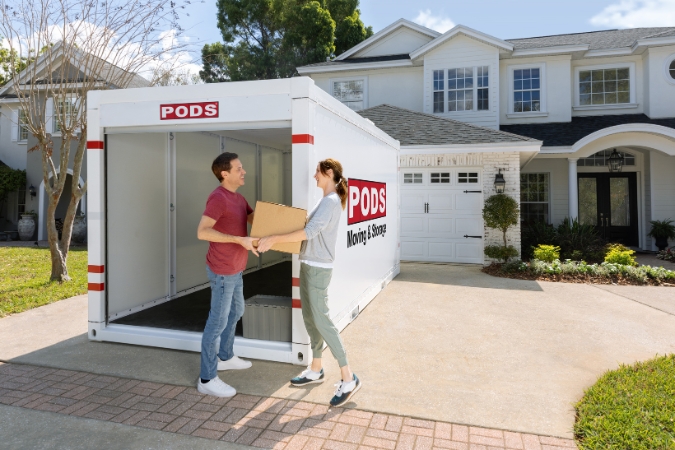
Moving during hurricane season? Load your PODS portable storage container at your own pace and stay flexible if weather delays your plans.
How PODS Helps: The Ultimate Scheduling Flexibility Advantage
When tropical weather threatens your timeline, having an adaptable moving plan can save your sanity. That’s why choosing flexibility when you’re moving during hurricane season is key. Luckily, PODS puts that advantage directly in your hands.
Instead of rushing to load a truck while a storm churns in the Gulf, PODS delivers a portable storage container right to your driveway ahead of time, so you can load the container at your own pace. If a storm suddenly threatens your area, PODS can help you adapt your timeline and plan your move safely. When you’re ready, your container will be picked up and delivered right to your new home. You can also keep it in a secure PODS Storage Center if you need more time.
Get a free local moving quote online, or call 877-350-7637 for long-distance moving.
*This article was written on behalf of PODS Enterprises, LLC (“PODS”). PODS does not warrant the completeness or accuracy of any information contained in this article and disclaims any liability for reliance upon the content herein.

Your quote in 60 seconds
Get pricing tailored to your needs!
Related Articles



What is a Moving Loan? Your Essential Guide to the What, When, Why, and How to Use a Loan for Your Next Move
Moving Tips and Hacks
Read more
Moving While Working Remotely? 5 Tips To Make It Easier & 5 Hotspots Remote Employees Are Moving to in 2026
Moving Tips and Hacks
Read more
Moving Out For the First Time Checklist: A Step-by-Step Guide To Leaving Home
Moving Tips and Hacks
Read more