
How to Move a Mattress Like a Pro: A Step-By-Step Guide
Moving Tips and Hacks
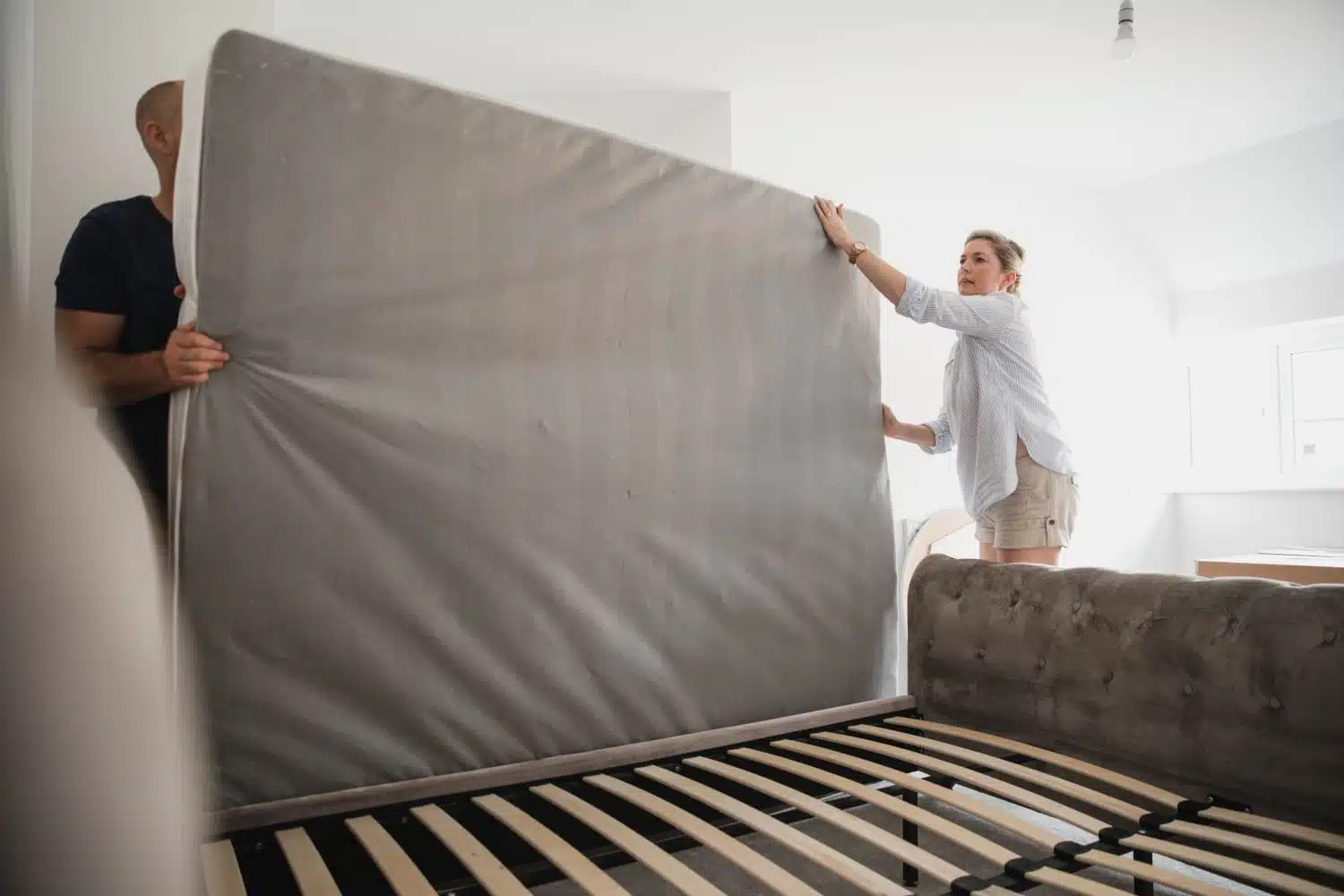
TL;DR: How To Move a Mattress
|
I’ll always remember when I became an expert on how to move a mattress. When I started my sophomore year of college, my mother bought me the mattress of my dreams. It was a gift she insisted on and referred to as an investment. Initially, I thought the idea was ridiculous. However, the joke’s on me because more than a decade after parting ways, I still daydream about that mattress — frequently. (No joke: My friends used to come over just to take naps on this mattress!)
It wasn’t long before the mattress became one of my must-keep items whenever I moved, whether I was packing and moving across town or full-on across the country. Whoever would have thought that moving a mattress would be such a priority?
Real talk: Moving a mattress isn’t always worth the hassle, but if you find yourself with a mattress that’s a keeper, here are our best tips on how to pack a mattress for moving — all while keeping it in stellar, sleep-worthy condition.
How To Move a Mattress: A Step-By-Step Guide
Follow these nine steps on how to move a mattress easily, quickly, securely, and successfully.
Step 1: Measure Your Mattress
Pull out your tape measure! When moving a mattress, it’s key to not only know the standard size — twin, double, full, queen, king, or California king — but also its exact dimensions. This will determine everything from the size of the mattress bag you’ll need to the moving method and storage solutions to use.
Step 2: Gather All Your Supplies
You’ll need things like mattress bags, moving tape, scissors, straps, or ropes to secure the mattress, and a dolly. Fortunately, we’ve included a detailed supply list for how to pack a mattress for moving below. (This will make shopping trips simpler because you’ll have everything you need in one place.)
Step 3: Make Sure There’s Enough Working Space
Give yourself enough room to prepare for moving a mattress. If you can move as many boxes and pieces of furniture out of the way as possible beforehand, this is ideal. You want to keep the mattress safe and have enough elbow room, but you also want to protect all your other belongings. It’s much easier to scrape a wall or dent a filing cabinet if it’s in the path of your mattress.
| Pro tip: Packing up your mattress last will free up space in the room and give you something to sleep on until the night before your move. Nobody wants to be in a sleeping bag the days leading up to your big move! |
Step 4: Enlist a Helping Hand (or Two)
Are you able to learn how to move a mattress by yourself? Even if you physically could, you shouldn’t! Mattresses are heavy, awkward, and love to flop around. If you’re trying to figure out how to move your mattress by yourself — don’t.
Even professional movers use more than one person when moving them. Instead, try to get the help of a friend, neighbor, or family member. You can also hire help through a freelance labor service like TaskRabbit or Handy, or get hourly packing and loading assistance if you want specialists to take care of the heavy lifting.
Step 5: Place Your Clean Mattress in a Heavy-Duty Mattress Bag
Investing in a heavy-duty mattress bag will help protect your mattress — and keep it clean — during the move, especially if you’re putting it in storage. Bags are sold in standard mattress sizes, but you’ll need to know the depth of your mattress to make sure the bag is big enough. They usually come in packages of two, so you can use one for your box springs, too. If you have a memory foam mattress, follow the manufacturer’s steps for compressing or rolling it up correctly.
Step 6: Clear a Path for Moving a Mattress
Remove any breakables along the route, like lamps, hanging pictures, potted plants, or anything else that could possibly be a casualty in the face of moving a mattress that tends to wobble.
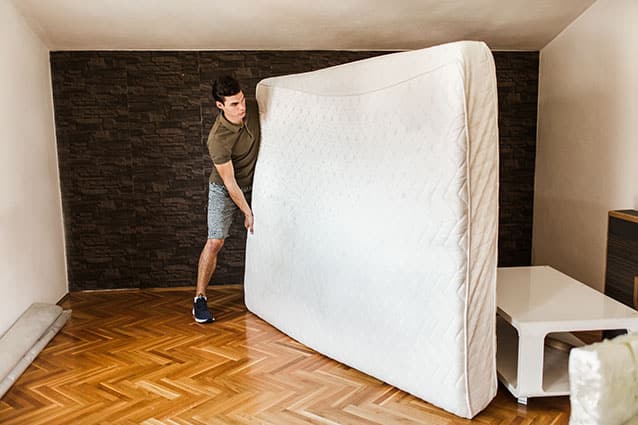 Moving a mattress vertically on its side is much easier than trying to pick it up flat.
Step 7: Flip the Mattress on Its Side So It’s Easier To Move
Wondering how to move a mattress when you’re working with lower ceiling heights, narrow doors, and/or stairs (aka 99 percent of movers)? Usually, this means flipping it horizontally so the mattress is longer than it is tall. It’s rare to be able to move a flat-positioned mattress, especially since you’ll likely have to go through doorways. You may be able to flip it vertically at different stages of moving a mattress, which makes it somewhat easier to handle.
Step 8: Leave a Narrow Space for Your Mattress in the Truck or Container
A mattress’s shape is one of its biggest advantages — it can fit in thin spaces with ease! Leave a narrow space between your stuff and the wall of the container, then slip your mattress into it by standing it on its side. This guarantees easy access when you get to your new home — and the faster you unload, the sooner you get to take a power nap.
| Note: Only do this if you plan to unload quickly. If you leave the mattress standing horizontally for a month or so, it will come out warped. If you need to leave your mattress in storage for a while, place it flat on top of a solid surface. This will keep it from deforming over time. |
Step 9: Load and Secure the Mattress
The way you load the mattress depends on its size, but the variety is also a factor. A memory foam mattress will need special care compared to rigid box springs. Here are the best methods for packing and moving a mattress of any style.
Traditional Innerspring or Encased-Coil Mattress
Position on its side length-wise or flat, on top of a flat surface (in the same position as for sleeping), with nothing on top.
Memory Foam or Hybrid Mattress
Position flat, on top of a flat surface, with nothing on top of it.
Box Springs
This can be positioned flat or on the side, with nothing on top (unless it’s the mattress).
How To Move a Mattress: Dealing With Different Transportation Methods
Moving Trucks, Portable Containers, and Cargo Vans (for Moving Only)
Load the mattress on its side lengthwise, using an interior wall of the vehicle or container for support. Surround it with other heavy objects with flat surfaces to keep it in place. Use rope or ratchet straps to secure the mattress in place. PODS moving services and containers, most moving trucks, and cargo vans have built-in tie-down handles, which make this a cinch. You can also pack in furniture or heavy boxes on the exposed side for extra support. Avoid putting anything on top of the mattress, though.
Cars and SUVs
Now, let’s address how to transport a full-size mattress or a smaller twin. These smaller-sized mattresses may actually fit inside a passenger van or large SUV, if you take out the seats. To find out if yours will fit, remove the seats and measure the cargo space against the dimensions of your mattress. You can also strap most mattresses to the top of a car, but this is the riskiest option, and I don’t recommend it. It’s extremely hard to secure the mattress and can cause damage to your mattress or car — or worse, an accident.
If this is your only option, cars and SUVs with flat roofs and roof racks are the way to go. Place the mattress on the roof and secure it by tying it directly to the roof racks. Do this in as many places as possible to really anchor the mattress. When driving, maintain awareness for if anything feels off, especially when you hit higher speeds. A weird bump or change in control could indicate slippage or a loosened tie.
Storage Containers or Units
If you are moving a mattress and will be storing it in a storage unit or storage container, be sure to maintain best practices — lay it flat with nothing on top. If a mattress is stored on its side for an extended period, that can damage its internal integrity and shorten its lifespan.

Moving a mattress is much easier with the right supplies.
How To Move a Mattress: Supplies You'll Need
Here’s a handy breakdown of all the essential items you’ll need to make moving a mattress a success.
Mattress Bag
Find a durable mattress bag to keep everything clean and protected. Since these can rip during the moving process, I like to double bag my mattress and box springs for extra protection. Be sure to buy the right size, especially when it comes to depth. (We’ll learn to measure mattresses below!)
Moving Tape
If you’re moving a mattress, you should have a healthy supply of tape. This will come in handy after you’ve placed your mattress inside the plastic moving mattress bag and need to seal it up.
Scissors
Some folks will recommend using a box cutter to get your mattress out of the mattress bag, but I’ve found out the hard way that box cutters make it way too easy to ruin your mattress. Scissors are a safer bet when moving a mattress.
Rope or Ratchet Straps
You’ll want to use either rope or ratchet straps to secure it inside your chosen moving vehicle. They have hardware fasteners that are specifically made to secure cargo. Grab a few more than you think you’ll need, just in case the bed ends up being bigger than you estimated and you need to extend the length of the ratchet straps by hooking on extra straps. If you’re using rope, get a thick, industrial-grade rope by weight — and completely skip those bungee cords that have too much give, which results in an unsafe, unsecured mattress.
Furniture Dolly (Optional)
If you’re wondering how to move a mattress when neither you nor your moving buddies can lift or navigate heavy items, it’s perfectly fine to hack your way through the actual process of physically moving a mattress with a dolly. These make moving a mattress far more accessible to people of all strengths, and it alleviates potential muscle and back strain you could experience.
For starters, you can either push it along or rest it on top of a large piece of cardboard, but it’s easier to use a dolly. While a mattress dolly is ideal — it comes with a sturdy slot to keep your mattress in position — rentals can be hard to find. You can opt for renting a four-wheel furniture dolly instead and use it to help move other household items and heavy boxes.
How to Move a Mattress: Taking Measurements
While the standardized mattress size can help you understand the general size of your mattress, the exact measurements can vary among makers. So, it’s important to measure anyway. You’ll want to measure it for length, width, and depth (thickness).
- Length: The longest side of the mattress. When lying down, this is the side that runs from your head to your toes.
- Width: The shorter part of the mattress.
- Depth: Another term for the thickness of your mattress. A typical mattress is between 8 and 14 inches thick.
If you have the manufacturer’s documentation for the exact product, the dimensions may be included in it as well.
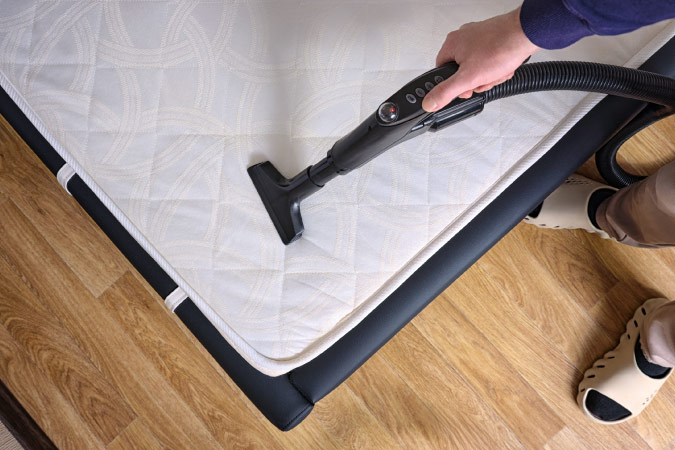
It’s important to clean your mattress before storing it.
How to Move a Mattress: Storage Dos and Don’ts
We tend not to think much about our mattresses beyond whether or not they are holding up their end of the bargain when we sleep. Here is a summary of best practices to remember throughout the process:
- Clean your mattress before and after you put it in storage by vacuuming all sides, using an upholstery cleaner, and disinfectant spray.
- Use mattress bags as protectors from dust, moisture, and deterioration.
- Don’t store the mattress on its side for the long term. I found this out the hard way after storing a wonderful, all-foam Tuft & Needle mattress (and putting things on top) for two years. It was never the same.
- If you must store it on its side, try to rotate its position every 30 days or so.
- Avoid extreme temperatures and humidity by keeping it out of uninsulated places.
- Don’t put anything on top of the mattress to preserve its shape.
- Additionally, for anyone curious about how to move or store a mattress topper, here’s some good news: It’s a lot easier. Just roll it up tightly, wrap it in plastic and tape, and toss it in the storage unit or pack it in a box alongside your linens.
How to Move a Mattress — FAQ
Q: How do you move a mattress without professional movers?
A: The best way to move a mattress without professional movers is for two people to turn the mattress on its side, with each person holding the corner of an end.
Q: How do you compress a mattress for moving?
A: You can compress a memory foam mattress for moving by putting it in a vacuum bag and removing the air with a vacuum. However, DIY mattress compression can damage the mattress, cause it to lose support, or make it lose its shape entirely. Also, if your mattress is an innerspring or hybrid, compression can damage the coils. No matter what, if you’re looking for tips on how to move a mattress when you’re tight on space, just be sure to never fold the mattress, as it may compromise the integrity of the item.
Q: What is the easiest way to move a mattress?
A: When moving a mattress, you should have at least one other person (if not more) helping you carry it and navigate it to the moving truck. After putting it in a bag and clearing the path, flip it horizontally so you have a better chance of getting it through tight spaces.
Q: Can a single person move a mattress?
A: A single person could be capable of learning how to move a mattress on their own, but it is not recommended. Even professionals need help, because it is safer and faster to have more hands than just your own.
With PODS, You Can Move Your Mattress — And the Rest of Your Things, Too
When you look at a breakdown of how to move a mattress, you may realize it’s more work than you can manage on your own. If you’d like to leave the job to professional moving services, PODS can refer you to local packing and loading assistance so you can focus on packing and loading less-cumbersome household items. One month’s storage is built into the cost of every move, so you can take the time you need! At the end of the day, moving a mattress can be hard work, but doing it right is well worth the effort. Once your head hits the pillow in your new home, you’ll be glad you took the time to do it right.
Visit PODS online for a free local moving quote or call 877-350-7637 for long-distance moving.
Alex Keight is a freelance writer based in Los Angeles who has moved 20+ times because she loves to experience new places.
*This article was written on behalf of PODS Enterprises, LLC (“PODS”). PODS does not warrant the completeness or accuracy of any information contained in this article and disclaims any liability for reliance upon the content herein.

Your quote in 60 seconds
Get pricing tailored to your needs!
Related Articles



What is a Moving Loan? Your Essential Guide to the What, When, Why, and How to Use a Loan for Your Next Move
Moving Tips and Hacks
Read more
Moving While Working Remotely? 5 Tips To Make It Easier & 5 Hotspots Remote Employees Are Moving to in 2026
Moving Tips and Hacks
Read more
Moving Out For the First Time Checklist: A Step-by-Step Guide To Leaving Home
Moving Tips and Hacks
Read more