Facilities Management Storage Solutions for 6 Common Challenges
StorageLong-Term Storage
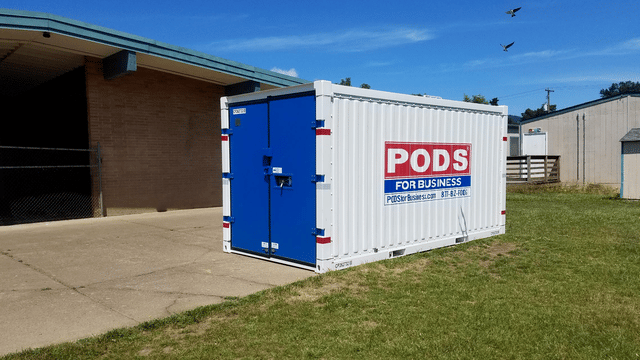
Quick Answer: Top Storage Challenges in Facilities Management Facilities managers face six recurring storage challenges:
Facilities management storage solutions such as portable storage containers can address these challenges by adding weather-resistant, ground-level storage directly at a facility. Containers can remain on-site for convenient access or be moved to a PODS Storage Center when space is limited. PODS Business Solutions Specialists can also coordinate storage across multiple locations. |
Facilities managers have a lot on their plates. Building maintenance is only part of the job. Depending on the organization, facilities teams may also oversee security, space utilization, preventive maintenance, emergency planning, renovations, safety requirements, and the day-to-day needs of building occupants.
Those responsibilities can create significant storage demands, particularly for organizations with multiple locations or limited back-of-house space. Portable storage for facility managers can provide additional capacity without permanently dedicating valuable interior space to inventory, equipment, or supplies.
Facilities Manager Responsibilities & Related Storage Demands
| Core Facilities Manager Responsibilities | Storage Demands |
|---|---|
| Risk mitigation and personnel safety | Storage for emergency supplies, PPE, and safety equipment |
| Security oversight | Secure, lockable on-site storage for appropriate materials |
| Space management | Overflow storage for non-revenue-generating inventory |
| Preventive maintenance and repairs | Storage for tools, parts, and equipment related to HVAC, plumbing, and electrical work |
| Disaster planning and emergency response | On-site storage of pre-stocked supplies for rapid deployment |
| Remodeling and new location openings | Temporary storage for fixtures, furniture, and equipment |
| Seasonal inventory management | Off-site or on-site storage for seasonal merchandise and equipment |
| Health and safety compliance | Organized storage for appropriate cleaning supplies and safety equipment |
1. Space Planning
In businesses like retail stores and restaurants, floor space can directly support revenue generation, making space optimization a priority. The goal is to maximize display, dining, or customer-facing areas without compromising the customer experience or back-of-house operations.
Smart inventory management is an important place to start. Stockrooms need to remain organized so merchandise and supplies can be located quickly.
When backrooms become overcrowded, commercial storage containers for businesses can provide overflow capacity just outside the facility. Out-of-season merchandise, furniture, fixtures, and other appropriate inventory can be moved out of valuable interior space while remaining accessible.
If keeping a container on-site long term isn't practical, portable storage provides another option: Load the container at the facility, then have it moved to a secure storage center. Then simply have the container returned to the facility when you’re ready to unload. This eliminates the need to load a rental truck, unload everything into storage, and repeat the process when those items are needed again.

Well organized inventory and documentation can help facilities teams keep safety supplies and maintenance materials accessible and easier to manage.
2. Compliance With Health and Safety Regulations
Health and safety responsibilities extend beyond keeping a facility clean. Facilities managers may need to maintain safety equipment, first-aid supplies, cleaning products, maintenance materials, and documentation while ensuring employees can access required resources.
For workplaces with hazardous chemicals, OSHA's Hazard Communication Standard requires employers to maintain a written hazard communication program, properly label workplace chemical containers, provide employee training, and make Safety Data Sheets readily accessible to workers. Storage requirements vary by material and workplace, so a standard portable storage container should not be assumed to be suitable for hazardous-material storage.
For appropriate nonhazardous supplies, however, a dedicated storage area can help facilities teams separate maintenance, cleaning, and safety inventory from general merchandise or operational space. Clearly labeled shelving and inventory controls can make supplies easier to locate, track, and replenish.
Organization also matters during inspections or audits. Maintenance records, inspection documentation, replacement equipment, and other facility materials are easier to manage when they have designated locations rather than being spread across closets, offices, and stockrooms.
Emergency supplies require particular attention to accessibility. OSHA's general-industry first-aid standard requires adequate first-aid supplies to be readily available under the circumstances specified by the standard.
The key is matching the storage solution to the material. Portable storage can help organize appropriate overflow supplies and equipment, while regulated chemicals, first-aid supplies, fire-safety equipment, and other controlled materials must be stored according to applicable requirements.
3. Seasonal Storage Demands
Seasonal storage is a recurring challenge across industries. Depending on the organization, facilities management storage needs may include:
- Outdoor heating lamps
- Patio furniture
- Holiday lighting and decorations
- Seasonal merchandise
- Gardening tools
- Pool maintenance equipment
- School sports equipment
On-site storage solutions for business can keep frequently needed seasonal inventory close at hand. When those items aren't needed for several months, portable containers can be stored off-site and redelivered when it's time to rotate inventory.
Instead of renting a truck, loading it, driving to self-storage, unloading everything, and reversing the process next season, the container itself can be transported to and from the facility as needed. That means fewer handling steps and less disruption for facilities staff.
4. Storage for Preventive Maintenance or Repairs
Preventive maintenance and repairs are core facilities-management responsibilities, and both come with storage requirements.
Facilities may need space for HVAC supplies, plumbing parts, landscaping equipment, electrical components, tools, replacement fixtures, and other maintenance inventory. Keeping appropriate supplies in a portable container on-site gives maintenance teams ground-level access without consuming mechanical rooms, closets, or other interior space.
This model can be particularly useful for multi-location operations. Rather than overstocking every facility, an organization may be able to maintain selected equipment and supplies in a portable container and have the loaded container moved to another facility as needs change.
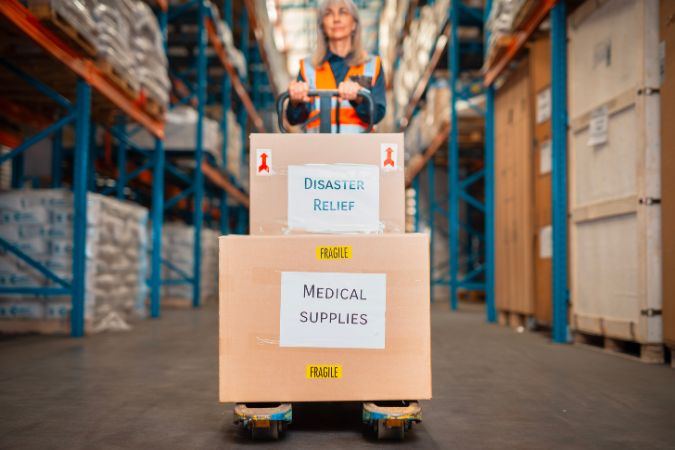
Keeping appropriate emergency response and recovery supplies organized can help facilities teams prepare for unexpected disruptions.
5. Emergency Response Storage
From wildfires and flooding to burst pipes and other facility emergencies, disruptions can occur with little warning. Emergency planning therefore includes determining where emergency response supplies and recovery materials will be kept.
One option is to pre-stock a portable container with appropriate disaster-recovery materials and store it off-site until needed. An organization preparing for hurricane season, for example, could arrange to have the container delivered according to its emergency plan.
Portable storage can also support recovery after an incident. If part of a facility requires repairs, furniture, fixtures, equipment, and other contents can be temporarily moved into a container to clear the affected area. This can help unaffected portions of a facility remain operational while repairs are underway.
6. Remodeling and New Location Openings
Planned remodels and new location openings create many of the same storage challenges as emergency restoration projects — only with more time to prepare.
Furniture, fixtures, equipment, displays, and other materials may need to be removed from active work areas or staged before installation. Portable containers provide temporary space near the project without taking up usable interior square footage.
For an existing location, this can help facilities teams phase construction and keep part of the operation open rather than clearing the entire building at once. The same strategy works for new openings, with portable containers providing a space for fixtures, furniture, and equipment to be staged before installation.
Recap: How Portable Containers Solve Storage Challenges
Here's how portable storage containers address the six core facilities management storage challenges:
Facilities Management Storage Challenges — Portable Container Solutions
| Storage Challenge | How Portable Containers Help | Key Benefit |
|---|---|---|
| Space planning | Store appropriate overflow or out-of-season inventory off the floor or nearby | Frees interior floor space without permanent storage |
| Health and safety compliance | Organize appropriate cleaning, maintenance, and safety supplies separately | Supports more organized facility procedures |
| Seasonal storage | Load at the facility and store the container off-site between uses | Reduces truck rentals and repeated handling |
| Preventive maintenance | Keep tools, parts, and equipment on-site or move them between facilities | Provides on-demand access |
| Emergency response | Pre-stock appropriate recovery materials for planned deployment | Helps teams prepare supplies in advance |
| Renovations and openings | Stage fixtures, furniture, and equipment near construction areas | Supports phased projects and reduces disruption |
Facilities Management Storage Solutions — FAQs
Q: What is the best storage solution for a facilities manager?
A: It depends on what needs to be stored, how frequently employees need access, and whether the organization has one facility or many. Portable storage containers can work well for overflow inventory, seasonal equipment, maintenance materials, and renovation contents. Materials subject to specific safety or regulatory requirements need an appropriate compliant storage solution.
Q: How do facilities managers handle seasonal storage?
A: A portable storage container can be delivered for convenient loading and then stored off-site during the off-season and redelivered when inventory or equipment is needed again. Multi-location organizations can also coordinate containers according to each facility's schedule.
Q: How can I add storage space to my business without building a warehouse?
A: Portable storage containers can add capacity without constructing permanent storage or committing to a warehouse lease. A container can remain on-site where appropriate or be moved off-site when immediate access isn't necessary.
Q: Can you rent portable storage containers for commercial use?
A: Yes. PODS offers commercial storage containers for businesses in multiple sizes. Containers can be delivered to commercial sites and, where available and appropriate, stored at a secure PODS Storage Center. PODS Business Solutions Specialists can coordinate logistics for multi-location organizations.
Q: How do businesses store equipment for preventive maintenance across multiple locations?
A: Facilities teams can centralize selected maintenance tools, parts, and appropriate supplies rather than duplicating inventory at every location. A portable container can provide ground-level storage and be relocated between facilities as needs change.
Q: What should facilities managers store in a portable container during a renovation?
A: Common uses include furniture, shelving, displays, fixtures, equipment, and other contents that need to be cleared from construction areas. On-site storage keeps those items accessible and can support phased renovations.
Q: How is PODS for Business different from residential PODS?
A: PODS for Business provides commercial customers with dedicated Business Solutions Specialists who can help coordinate pricing, scheduling, special requests, and transportation and storage logistics. For multi-location organizations, that means a centralized contact for coordinating requirements across facilities.
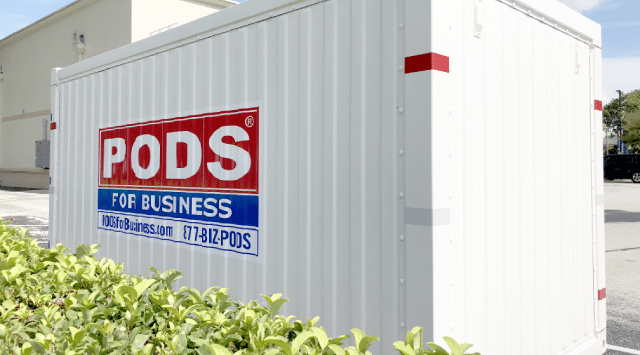
PODS for Business portable storage containers give facilities teams flexible storage that can remain on-site or be moved to a PODS Storage Center.
How PODS Helps With Storage Challenges
PODS for Business works with facilities teams managing individual properties and multi-location operations. Commercial portable storage containers are available in 8-foot, 12-foot, and 16-foot options. The standard 16-foot container offers 827 cubic feet of space and fits in roughly a standard parking space. PODS for Business also offers a 16-foot all-steel commercial container, perfect for extended construction site storage.
Containers provide ground-level loading, while PODZILLA, the company's hydraulic lift system, moves containers into position while keeping them level. Units can remain on-site or be moved to a PODS Storage Center when facility space is limited.
For multi-location organizations, PODS Business Solutions Specialists provide a central contact for quotes, delivery and pickup scheduling, schedule changes, special requests, and broader transportation and storage logistics.
Facilities teams can learn more about PODS for Business and facility management solutions online or contact a Business Solutions Specialist at 866-440-2621.
*This content was refreshed with the assistance of artificial intelligence. It was then fact-checked, proofread, and edited by the real-life intelligence of the PODS Blog team. PODS however does not warrant the completeness or accuracy of any information contained in this publication and disclaims any liability for reliance upon the content herein.

Your quote in 60 seconds
Get pricing tailored to your needs!