
How to Have an Estate Sale: Simple Tips for Netting More Cash
Real Estate Advice

TL;DR: Estate Sale Planning
|
Have a house full of things you’re looking to offload in one fell swoop? Consider learning how to have an estate sale! Estate sales differ from your run-of-the-mill garage or yard sale and are a great way to make money on a high volume of household items — from vintage furniture to everyday items like kitchenware. Curious about the steps involved in estate sale planning? Here’s everything you need to know.
What Is an Estate Sale?
An estate sale is a large sale of someone’s personal possessions — similar to a garage sale but on a bigger scale. Estate sales include a much higher number of possessions and can feature high-ticket items, whereas learning how to stage a successful garage sale is a great skill to have for offloading a handful of second-hand bargain items.
Why Do People Have Estate Sales?
People hold estate sales after the death of a loved one as a way to liquidate their personal assets. However, you can also turn to estate sales to declutter your home before a move, make extra money, or help elderly parents relocate to an affordable place to retire.
Although the term “estate sale” may sound slightly outdated, its popularity holds steadfast, especially as the cost of living rises. People continue to switch up their living situations, relocate to other cities with long-distance moves, and, sadly, deal with the loss of loved ones.
How to Have an Estate Sale That Is As Successful As Possible
Estate sale planning is much more involved — from inventory and pricing to advertising and day-of-sale operations. Every sale is unique, depending on the reason, location, items offered, and the buyers it attracts. Here are our best tips for how to have an estate sale.
 Thorough preparation is key to successful estate sale planning, so make sure to take inventory of each item and record its price before you open your doors to potential buyers.
1. Take Inventory of the Items You Want To Sell
You have to decide what you want to keep, sell, or get rid of. If you’re holding an estate sale after a death, you’re likely looking to liquidate as many of the assets as possible. However, if you’re downsizing your home or moving, you’ll want to take a more discerning approach. Check the house from top to bottom. You may be surprised at how many things you forgot you owned!
2. Price Items Strategically
Deciding on item prices is probably the trickiest part of learning how to have an estate sale, especially if you’re selling items that belonged to someone else. While rare items and antiques have a somewhat consistent price, many items will vary in value. Something that fetches a high dollar in the best small towns in Connecticut may be considered a throwaway in Florida.
Remember, buyers are objective, so try not to let emotional attachment dictate price. Determine the highest amount you can reasonably ask and the lowest price you’re willing to accept. For items you might otherwise toss or that don’t have obvious significant value, consider bargain pricing or grouping them on a table or bin where all items have a flat price.
| Pro Tip: It’s always a good idea to include details about the item on the price tag, so the potential buyer understands the item’s worth. |
3. Get Professional Appraisals for Items of Value
We recommend getting a professional appraisal of any high-value items you’re planning to include in your estate sale. Professional appraisers will make sure you don’t inaccurately price your items. They know the ins and outs of how to have an estate sale and can help determine if things, like collector’s items and jewelry, are the real deal.
Remember, for some people, estate sales are an entire hobby with their own culture and norms. The most serious frequenters know professional pricing is a key part of how to have an estate sale that’s taken seriously.
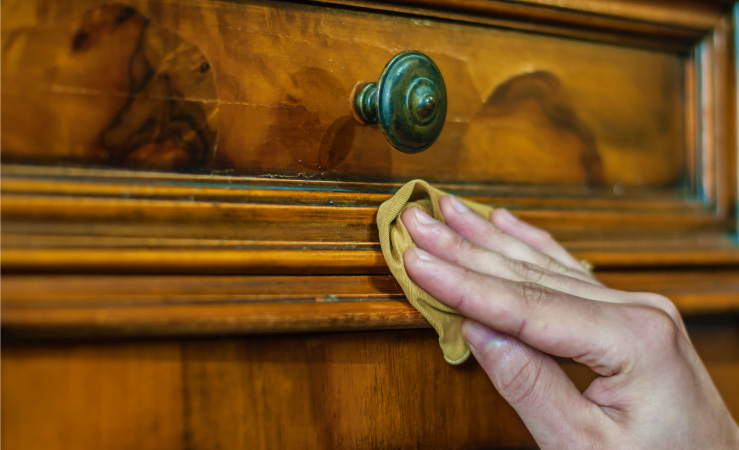 What is an estate sale without a gorgeous antique? A little TLC goes a long way toward improving the look — not to mention the price! — of a potential estate sale treasure.
4. Decide If Anything Is Worth a Quick Clean or Fix
You’d be surprised what a smidge of TLC can do. A simple shine, lick of paint, quick wash, or easy mend can turn an item destined for the trash into something worth selling. However, not everything is worth salvaging, so weigh the time and materials it will take to fix or prepare the item versus how much it may potentially garner.

Using a portable storage container to sort and organize items before your estate sale is a handy tip.
5. Consider Temporary Storage
Estate sales seldom happen overnight. Renting portable storage containers can help relieve time pressure and free up space during the estate sale planning process. You can use a self-storage unit to store items securely while you’re planning.
You can also have PODS onsite self-storage containers delivered to you to store your items where the estate sale is taking place. This gives you 24/7 access to your inventory while you’re sorting, pricing, and prepping for your estate sale. If you need more time before holding the sale, have the container taken to a secure PODS storage unit facility and then delivered back to your home or another location when you’re ready.
6. Hold Your Estate Sale on the Weekend
When you’re considering how to run an estate sale, your foremost goal is to draw prospective buyers. So, leverage a weekend day to heighten chances. Keep in mind holiday weekends can be a toss-up, since days off might mean people are traveling out of town. Also, never hold an estate sale on Christmas or New Year's Day, no matter what day of the week they happen to fall on.
7. Advertise Your Estate Sale and Include Pictures of Your Best Items
Part of learning how to have an estate sale is remembering to advertise, which is key to piquing the interest of buyers and getting the word out. There’s always a chance a handful of people will walk or drive by, but serious buyers scour for the best sales by looking online, on social media, and in newspapers. Be sure to take pictures of your most appealing items, showcase a range of the types of things people will find at your sale, highlight rare items and bargain bins, and triple-check that the date, hours, and address are correct.
8. Set Up Your Selling Area Precisely to Maximize Sales
Use top home staging tips to influence how you prepare your sale. Presentation of your treasures is a big factor in success. Be sure to lay everything out so items are visible. Clearly mark prices and arrange any tables or shelves in a way that keeps the flow of foot traffic going. Avoid any layouts that can cause congestion.
If you’re hosting the sale at your home, be sure to clearly mark any items that are not for sale — or tuck them away in a portable container. You could also use a container for display space. It sits right at ground level, provides shade and protection from the elements, and makes it easy to have a two-day event: If you don’t sell everything on the first day, no need to lug everything back inside and then out again — just lock up the container.
9. Make It Clear Which Areas Are Off Limits
In the buyer’s eyes, the estate sale is basically giving them permission to snoop around every inch of the property. So, when you’re planning how to organize an estate sale, be sure to clearly mark any areas or items you don’t want strangers rifling through.
If you don’t have access to temporary storage, keep off-limit areas out of sight, if possible, by shutting doors and hanging signs that clearly state the areas are not included.
10. Enlist Lots of Help for the Big Day (or Days)
If the stars align, you may have dozens of people in the house at the same time. Cover the bases in your estate sale planning by being prepared with several helpers who can mingle throughout the home. Even if their sole purpose is to direct all questions to you, that’s still a huge help! If they want extra friend points, they can be additional “cashiers” to make a bigger impact!
 Local libraries, shelters, and thrift stores are always happy to accept books and other items leftover from estate sales — just be sure to call first!
11. Decide If You’re Going To Donate, Discard, Auction, or Keep Any Items That Don’t Sell
Ideally, all your items would sell, but that’s rarely the case. If you’re really looking to make money on unsold items, you can put items up for auction, or receive a tax credit by donating them to charity. Otherwise, decide if it’s something you want to keep or would rather donate or throw away.
12. Familiarize Yourself With Estate Sale Tax Laws
You’re likely to make more money in an estate sale. Therefore, it’s imperative to know and understand the tax laws as part of how to run an estate sale; you’ll likely owe taxes. In states like Delaware, Alaska, New Hampshire, Oregon, and Montana, you may be exempt, but this is not the case everywhere. Do your due diligence before you open your doors.
 Don’t start your estate sale planning before you get the answers to these FAQs.
(Source: loufre via Pixabay)
How to Have an Estate Sale FAQs
Q: How to organize an estate sale for beginners?
A: Start by organizing your items into categories. Pack things you want to keep, and neatly inventory, photograph, advertise, and display what you want to show off to your community. Publicize the event as much as possible by talking to your neighbors or posting about it on social media. On the day of the sale, have plenty of helping hands to guide visitors, check them out, and keep tabs on the property. Afterward, ensure you know the tax implications of hosting the event.
Q: How do estate sales make money?
A: Estate sales make money just like garage and yard sales do — but on a larger scale. Estate sales accept several forms of payment: Cash, card, app (like Venmo or PayPal), etc. Many estate sale companies also list items online, so you can actually make purchases without being there in person. Unlike small garage and yard sales, the owner of an estate sale may end up paying fees (to an estate sale company, to an appraiser, or in taxes, for example), but in the end, it’s typically a worthwhile endeavor.
Q: Do people haggle at estate sales?
A: Yes. Price haggling at an estate sale is part of the fun. Consider this when pricing your items. If an item is special (on paper, not just to you), factor that into the original price, and have in mind the lowest offer you’re willing to take.
Q: Are estate sales cash only?
A: Not necessarily. A key element of how to run an estate sale is making the process as seamless and convenient as possible for your prospective buyers. That means allowing a variety of payment methods. But if you’re not familiar with digital options and don’t have the time or desire to learn, cash is likely the way to go. Just be sure to make it clear in any advertising you do. Otherwise, you may lose out on some sales.
Q: Should you go DIY or hire a professional estate sale company?
A: Holding an estate sale isn’t as spontaneous or simple as setting up a quick garage sale. A DIY estate sale is a lot of work, but it’ll give you the most control and flexibility during the process. You’ll also get to keep all the profits (minus any taxes due). The DIY route is often the best route if your objective is to make money. On the other hand, hiring a professional estate sale company can save you a ton of time and effort. At a minimum, you’ll have to pay a portion of your profits in the form of a commission rate. Some consider it money well spent, especially if the items are not your own or you’re dealing with the death of a loved one.
Q: What percentage do most estate sale companies take?
A: Commission rates from estate sales vary, but generally fall somewhere around 35 percent of the gross profits. Many companies will work on a predetermined sliding scale, meaning their commission is based on how much you earn from your sale — as your profits increase, their commission rate goes up.
Q: What are some tips for hiring an estate sale company to handle your sale?
A: Here are a few things to consider before choosing who to hire:
- Read the company’s customer reviews.
- Check out the company’s BBB (Better Business Bureau) rating.
- Observe them in action. Visit an estate sale being held by a company you’re considering.
- Show the estate sale company everything you’re planning to sell — or throw away — so they can give you the most inclusive bid.
- Compare bids from at least three companies, if possible.
- Ask about any possible additional fees.
- Get a contract that is crystal clear.
Q: What time of the year is best for estate sales?
A: Surprisingly, estate sales are popular year-round. However, seasons can determine some shopping patterns. Late spring may be the most active, but interest peaks in late fall. Choose timing carefully.
Q: Are estate sale prices negotiable?
A: Yes, haggling is part of the estate sale culture. If you’re going the DIY route in your estate sale planning, you can make the call regarding whether you want to accept negotiations. But it’s likely you’ll be ready to make some deals in order to offload your merchandise.
Q: What items don't sell at an estate sale? What sells best at estate sales?
A: Consider what you would feel antsy about buying second-hand. Possessions like upholstered items, mattresses, old technologies, appliances, and light fixtures don’t get as much attention as other items. The bestsellers frequently include books, jewelry, tools, collectibles, and clothes.
Organize Your Estate Sale With PODS Portable Storage
Estate sale planning is possible with a clear understanding of the necessary steps. It will help anyone power through the process with greater calm and confidence. Streamline your estate sale with portable storage solutions from PODS. Have the container positioned conveniently in the driveway and use it as a staging area for sorting, organizing, and more. PODS can even refer you to local packing and loading services to help with any heavy lifting, no matter what your loved ones had packed away in the nooks and crannies of their home.
Visit PODS online for a free on-site storage quote.
Alex Keight is a frequent contributor to the PODS Blog who has moved 20+ times because she loves to experience new places.
Source for the feature image at the top courtesy of Ruoyu Li via Unsplash.
*This article was written on behalf of PODS Enterprises, LLC (“PODS”). PODS does not warrant the completeness or accuracy of any information contained in this article and disclaims any liability for reliance upon the content herein.

Your quote in 60 seconds
Get pricing tailored to your needs!
Related Articles



Write an Offer Letter for a House in 6 Simple Steps and Say Hello Your Dream Home
Real Estate Advice
Read more